 |
| Image source: Wikimedia Commons |

August 17, 2012
Trading aviation emissions – Part 3: Australia outlines its position


August 16, 2012
Report of the Expert Panel on Asylum Seekers and regional processing: legislation before the Senate
 |
| Image source: Australia Awards |
August 15, 2012
Despite the GFC, income support reliance remains low
 |
| Image source: Western Australian Department of Health
|
In this context, it is timely to look at the impact of previous changes to the welfare system and consider what proportion of the working age population is affected by issues being considered by the Committee.
Australia and the Arab-Israeli conflict: from ‘choosing the least of a number of evils’ to ‘strong backers of a two-state solution’
 |
| Image source: Wikimedia Commons |

August 13, 2012
Breaking the deadlock? The Report of the Expert Panel on Asylum Seekers
 |
| Image source: Department of Prime Minister and Cabinet |
On 28 June 2012 the Prime Minister and the Minister for Immigration and Citizenship announced that the Government would establish an expert advisory panel to consider options for “the best way forward for our nation in dealing with asylum seeker issues”. This followed months of political deadlock over how to best manage the issue of increasing numbers of asylum seekers arriving in Australia by boat, following the High Court’s rejection of the Government’s planned transfer arrangement with Malaysia in August 2011.
In February 2012 independent Member Rob Oakeshott introduced a Bill aimed at breaking the deadlock, which was supported by the Government. The Bill passed through the House of Representatives on 27 June 2012 but was defeated in the Senate the following day, with neither the Opposition nor the Greens prepared to support it, albeit for very different reasons. With few options left available to it, the Government announced the creation of a panel to provide expert advice on the best way forward.
August 6, 2012
Managing the performance of the health care system
 |
Image source: Health Statistics New South Wales
|
Performance of the health care system was put on the national agenda in 2010 when the then Prime Minister Kevin Rudd outlined his vision for the National Health and Hospital Network (NHHN). One of the features of the NHHN was improved reporting and performance standards. The precursor to this were the objectives, outcomes, progress measures and outputs that were agreed by the Council of Australian governments (COAG) in 2008 as part of the National Healthcare Agreement (NHA). Although aspects of the NHHN were re-negotiated, the commitment to improved transparency and accountability remained.
August 3, 2012
Socioeconomic dimensions of pokie machine losses
 |
| Image source:
|
August 2, 2012
Melbourne by-election results for the Greens
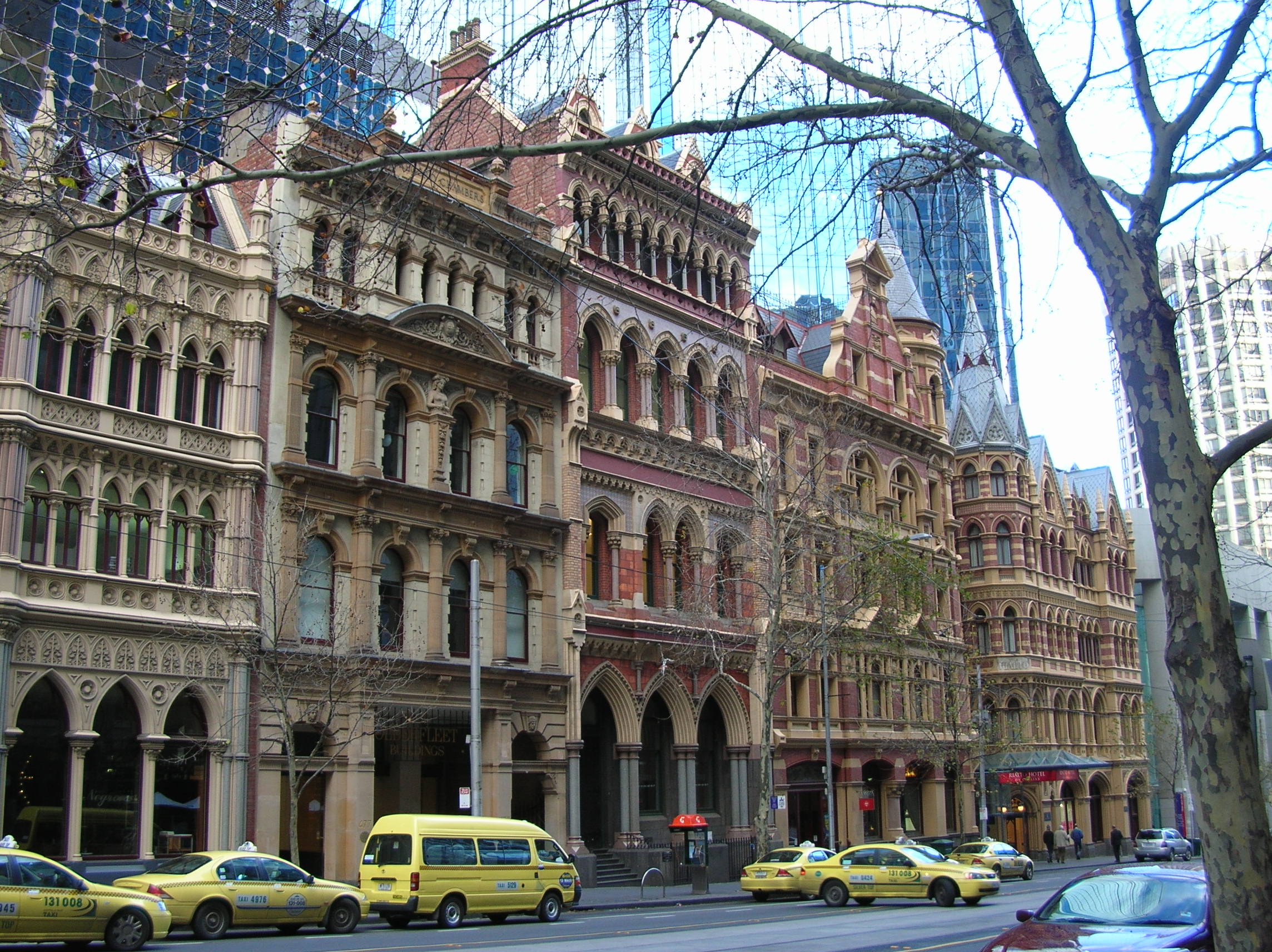 |
| Collins Street, Melbourne CBD Image source: Wikimedia Commons |

A by-election was conducted for the Victorian state electorate of Melbourne on Saturday 21 July 2012. Vote-counting and rechecking has now been completed, with the ALP emerging as the winning party with 51.51 per cent of votes after distribution of preferences.
August 1, 2012
Australia’s current debt position – update July 2012
In recent times a lot has been spoken about Australia’s debt level. This was no more evident than in the lead up to the last Federal election where it seemed to dominate debate. This article updates the data published in an earlier FlagPost titled Australia’s current debt position. I therefore intend in this article to report the latest available data on Australia’s level of debt for both the public and private sectors in gross and net terms. For more information on gross and net debt the reader is referred to the earlier FlagPost.
July 25, 2012
Sitting comfortably? How sitting is affecting our health
 |
| Image: Department of Immigration |

July 24, 2012
The consequences of a poor anti-money laundering program: the HSBC case study
 |
| Image source: Flickr user photobunny |
July 10, 2012
Staying on at school is not just a matter of money
There is considerable evidence about the correlation between socio-economic status (SES)–particularly parental income, education and occupation–and educational attainment. Hence the inclusion of a measure of SES on the Myschool website, which allows for the comparison of ‘SES-equivalent’ schools, and higher education institutions receiving funding on the basis of meeting targets for the representation of students from low SES backgrounds.
While traditional SES measures may allow for comparisons or targets, they provide little guidance to policy makers on how to overcome such disadvantage–it is generally not possible to change the education level of a student’s parent for example. However a new study has emphasised the role of student characteristics–aspirations, poor school experience and participation in activities such as smoking and alcohol consumption–which may prove more amenable to direct policy interventions.
 |
| Image: Victorian Government |
While traditional SES measures may allow for comparisons or targets, they provide little guidance to policy makers on how to overcome such disadvantage–it is generally not possible to change the education level of a student’s parent for example. However a new study has emphasised the role of student characteristics–aspirations, poor school experience and participation in activities such as smoking and alcohol consumption–which may prove more amenable to direct policy interventions.
July 9, 2012
Australia’s performance against Anti-corruption treaty reviewed
 |
| Image source: Commonwealth Ombudsman |
July 5, 2012
SBY’s visit – the bigger picture

At the second Indonesia-Australia Leaders’ Meeting in Darwin on 3 July, Prime Minister Julia Gillard and President Susilo Bambang Yudhoyono re-affirmed the two countries’ ‘comprehensive strategic partnership, based on a mutual commitment to each other’s progress, prosperity and security’. The
Joint Statement agreed by the two leaders highlights cooperation across a range of issues, including regional institutional architecture, trade, defence and maritime cooperation, policing, development assistance, and people-to-people links.
What can be done about the social determinants of health?
 |
| Image source: World Health Organization |
July 3, 2012
Trafficking in Persons Report 2012
 |
June 29, 2012
Appliance energy ratings get the standard treatment
 |
| Image source :ACT government |
New Place Based Income Management to commence 1 July
 |
| Image: Bankstown Railway Station (Wikimedia Commons) |

So, how will the new Place Based Income Management operate and how does it differ from existing forms? Why base it in particular areas? What do we know about whether or not it is likely to be successful?
June 28, 2012
Update on statistics for boat arrivals
The Parliamentary Library produces a number of publications about asylum seekers and immigration. The publication, Boat arrivals in Australia since 1976 provides a brief overview of the historical and political context surrounding boat arrivals in Australia. An update of the statistical appendix on boat arrival figures is provided below. Please note that the publication has not yet been formally updated.
June 27, 2012
Trafficking in Persons - Special Rapporteur's Report to the Human Rights Council
 On 22 June, Joy Ngozi Ezeilo, the Special Rapporteur on Trafficking in Persons especially women and children, presented her annual report to the United Nations Human Rights Council, including reports of her missions to Thailand and Australia.
Special Rapporteurs are independent experts appointed by the United Nations Human Rights Council (formerly the Commission on Human Rights) to investigate, monitor, and advise on human rights violations – world wide or in specific countries. In carrying out her mandate, the Special Rapporteur undertakes country visits to study the situation on the ground and, develop recommendations to better prevent or combat trafficking and protect the human rights of its victims; and takes action on complaints about human rights violations against trafficked persons.
June 26, 2012
Australia's tertiary students - the latest snapshot
The National Centre for Vocational Education Research (NCVER) has just released Tertiary Education and Training 2010, an annual publication that compares vocational education and training (VET) and higher education on a range of key measures.
It draws on data from the National VET Provider Collection and the Higher Education Statistics Collection.
It draws on data from the National VET Provider Collection and the Higher Education Statistics Collection.
June 22, 2012
How's it going? Australia's Health 2012
The thirteenth report on Australia's health was released by the Australian Institute of Health and Welfare (AIHW) on 21 June 2012. The AIHW describes Australia's Health 2012 as 'the most comprehensive and authoritative source of national information on health in Australia', and many would not disagree. Produced biennially since 1988, the report has grown both in size and stature as a reliable report card on the status of the country's health and the services and resources that deliver and support it. A companion In brief publication was also released.
 |
| Source: AIHW |
Is $325 million enough for Tasmania's health care system?
Last week, after much speculation, the Federal Government announced that it would provide an extra $325 million over four years to Tasmania’s health care system. Previously the Tasmanian Government had announced cuts of up to $500 million over four years to the health care system, commencing from 1 July 2011. Many of these cuts were directed to elective surgery, reduced services and the closure of hospital beds. The most recent Tasmanian budget (May 2012) announced a reduction of the savings target by $120 million.
 |
| Image source: www.yourhealth.gov.au |
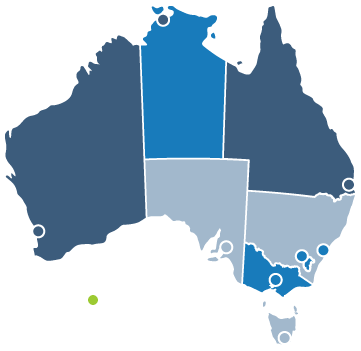
2011 Census release
 |
| Image Source: http://www.abs.gov.au/ |
Australia’s migrant population is growing and changing
In the decade to 2011, the proportion of the population who were born overseas increased from 27.4% to 30.2%.
Over the same period, the proportion of Australians with at least one parent born overseas increased from 42.7% to 46.3%
There was a shift away from Europe and towards Asia.
- The number born in India more than trebled, from 95 452 in 2001 to 295 362 in 2011.
- The number born in China (excludes SARs and Taiwan) more than doubled from 142 780 to 318 969.
June 21, 2012
Income management: some answers to key questions
 |
| Image: BasicsCard kiosk, (Centrelink) |

While the policy of income management of welfare payments has been highly controversial, the specific details of its various forms are not generally well understood.
The Parliamentary Library has released a Background Note seeking to address this lack of understanding. It provides a brief overview of the history of income management and responses to a number of key questions about the policy.
June 19, 2012
New marine reserve proposals
 |
| Image source: Wikimedia Commons |

June 15, 2012
Hearing impairment—the silent barrier to Closing the Gap
 |
| Image source: Northern Territory Government |
Dissecting the growth of vocational education and training in Victoria
 |
| Image source: Victorian Government |
Amid this debate, the National Centre for Vocational Education Research (NCVER) has released preliminary Students and Courses data for 2011. The full publication (due in July) provides data on the numbers of students, subject enrolments, hours of delivery and qualifications in Australia’s public vocational education and training (VET) system.
The preliminary data reveals some interesting results for one state in particular: Victoria.
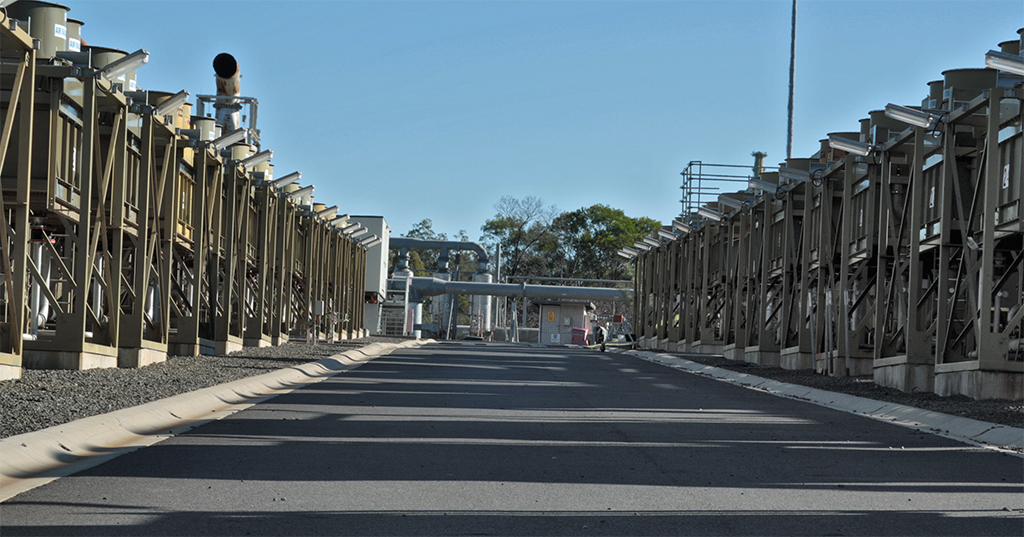
The deeper worries about coal seam gas
 |
| Image source: WikiMedia Commons |

People trafficking, forced marriage and slavery offences
The Crimes Legislation Amendments (Slavery, Slavery-like Conditions and People Trafficking) Bill 2012 was introduced into the House of Representatives on 30 May 2012. This Flagpost is a skeleton of a larger project.
If passed in its current form, this Bill will:
If passed in its current form, this Bill will:
- expand the definition of slavery to include physical and psychological threats, coercion and deception
- expand the servitude and exploitation offences to not be limited to sexual servitude
- create new offences for aggravated slavery-like offences.
- create new offences for forced marriage
- create new offences for harbouring or receiving a trafficking or slavery victim
- increase the penalties for debt bondage offences
World Refugee Day
 |
| Image source: http://www.unhcr.org/ |
June 13, 2012
Burma's economy—the long road ahead
 |
| Image source: Wikimedia Commons |
June 12, 2012
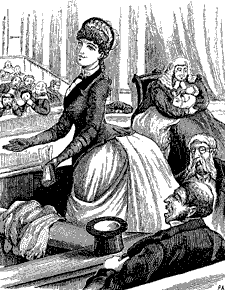
110th anniversary of the Commonwealth Franchise Act 1902
 |
| Image source: Wikimedia Commons |
June 4, 2012
Astronomical events
 |
| Image source: WA Department of Commerce via myregion.gov.au |
On 6th June 2012, just before 8:30 am along the east coast of Australia, the tiny dot of the planet Venus will again pass slowly across the face of the Sun, as seen from Earth. Such ‘Transits of Venus’ are infrequent events; the next transit does not occur until 2117 so this is one for us to savour. Many smaller observatories here will be trained on this solar event.
A labour market for the resources sector – what are Enterprise Migration Agreements?
 |
| Image source: Western Australia Department of Mines and Petroleum |
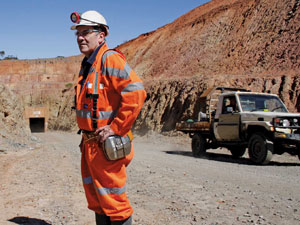
The Immigration Minister’s recent announcement that an Enterprise Migration Agreement (EMA), facilitating the recruitment of temporary overseas workers, had been granted to the Roy Hill project in the Pilbara appears to have taken many observers by surprise. It shouldn’t have.
June 1, 2012
New unit to lower health insurance premiums and improve competition
 |
| Image: Private Health Insurance Administration Council |
May 30, 2012
Australian elections in the next four years
There are between four and seven elections at the federal, state/territory or local government level each year. From now to the end of 2015 there will be one federal election, eight state or territory elections and seven local council elections. This does not include supplementary elections, by-elections or separate legislative council elections.
By the end of 2012 there will have been three state/territory elections (Queensland in March, the Northern Territory in August and the Australian Capital Territory in October) and four sets of local council elections across the Northern Territory in March, Queensland in April, New South Wales in September and Victoria in October.
The expulsion of Syrian diplomats
 |
| Image source: Voice of America |
May 28, 2012
Immigration detention: what are the alternatives?
Since 1992 when the policy of mandatory detention was introduced in Australia, the detention of asylum seekers arriving unauthorised by boat has received a great deal of public attention. In particular, the duration and conditions of their detention have been controversial issues that have plagued successive governments since the early 1990s when there were several hunger strikes, rooftop demonstrations and suicide attempts at Villawood and Port Hedland immigration detention centres.
 |
| Image source: http://www.immi.gov.au/ |
May 24, 2012
Codes of conduct for members of parliament
Many Australian and overseas parliaments have put in place codes of conduct covering ministers and members of parliament. Some parliaments have ethics or integrity commissioners to advise members on their code, while others have external bodies empowered to investigate members' conduct.
The federal Parliament is currently considering the arguments for and against a members' code of conduct and the benefits of establishing a National Integrity Commission.
A Parliamentary Library Background Note on parliamentary codes of conduct around Australia and in selected overseas jurisdictions has been updated to reflect some recent developments.
The following table summarises the codes of conduct operating in Australian parliaments:
Celebrating the 50th anniversary of Indigenous federal voting rights
 |
| Source: http://www.indigenous.gov.au/ |
In March 1962 the Commonwealth Electoral Act 1918 was amended to enable Indigenous people to enrol to vote in federal elections, but it was not compulsory for them to enrol. It was made an offence for anyone to use undue influence or pressure to induce them to enrol. Once they enrolled, however, voting was compulsory.
Same sex families
 |
| Image source:www.goodenoughmother.com |
One research review conducted in 1996 noted that the results are ‘exceptionally clear’ and ‘yield a picture of families thriving even in the midst of discrimination and oppression’:
May 23, 2012
Schapelle Corby granted clemency by Indonesian President
In April 2012, Indonesia’s Justice and Human Rights Ministry recommended Schapelle Corby’s jail sentence be reduced by ten years, on humanitarian grounds. Corby, now 34, is said to be suffering from mental illness. President Susilo Bambang Yudhoyono signed a letter on 15 May granting Corby clemency, cutting five years off her 20 year prison term. This is particularly significant as previously the Indonesian President has stated that he would not use his power of clemency in favour of drug offenders. This may have consequences for other Australians seeking clemency from the President, Andrew Chan and Myuran Sukumaran of the “Bali 9”.
May 22, 2012
New Zealand: Foreign Charter Vessels to be reflagged
 |
| Image source: Oyang 70, Photo by New Zealand Defence Force |
Commercial fishing in New Zealand is managed by a quota system, with all fishing quota owned by New Zealand companies. Foreign Charter Vessels (FCVs) are foreign owned and flagged fishing vessels leased by a New Zealand company to fish in New Zealand's Exclusive Economic Zone. As discussed in a Flagpost last year, the then Minister for Fisheries and Aquaculture, the Hon Phil Heatley MP, and the Minister for Labour, the Hon Kate Wilkinson MP, had jointly convened a ministerial inquiry into the use and operation of FCVs. This followed reports of serious abuse and exploitation of crew of commercial fishing fleets operating in New Zealand waters.
May 21, 2012
Latest Illicit Drug Data Report released
 |
| Image source: Australian Crime Commission |
May 17, 2012
‘For a Few Dollars More’: DFAT identifies priority posts
 |
| Image source: Wikimeida Commons |

Do alcohol health warning labels work?
On 24 May the House of Representatives Social Policy and Legal Affairs Committee is to hold a roundtable with alcohol industry representatives, through which it will canvass their views on health warning labels on alcohol containers, including specific warnings for pregnant women. On 31 May, the Committee will hold a similar hearing with public health and alcohol and drug non-government organisations. The Committee is also currently conducting an inquiry into the incidence and prevention of foetal alcohol spectrum disorder.
The hearings are being held in a context in which the Government has recently committed to certain alcohol labelling reforms in response to the recommendations of the Independent Review of Food Labelling Law and Policy. The Government has in its response taken account of the fact that, last year, the alcohol industry began voluntarily introducing new consumer information messages on the labels of alcohol products sold in Australia.
Perhaps the key issue that is likely to be considered in the course of the hearings is the question of whether or not alcohol health warning labels are effective in reducing alcohol-related harm. This question is the subject of a new Parliamentary Library paper, Alcohol warning labels—do they work? The paper provides a brief summary of some of the research evidence on the effectiveness of alcohol warning labels and a succinct overview of the context for the Government’s proposed labelling reforms.
In short, the paper finds that, based on the research evidence, alcohol health warning labels may increase consumers’ awareness of the risks associated with excess alcohol consumption. However, this increased awareness does not necessarily result in behavioural changes in those groups that are at highest risk of experiencing alcohol-related harms.
If alcohol health warning labels are to have any chance in spurring positive changes in drinking behaviours, then the evidence indicates that the messages they convey need to meet two main criteria. Firstly, they need to be arresting in their presentation of health risks, similar to those messages included on tobacco labels. And, secondly, they need to be varied reasonably frequently in order to counter consumer complacency.
Arguably, the new consumer information messages to be included on alcohol products by the alcohol industry do not meet the first of these criteria. And, given that this is the case, the paper suggests that they are unlikely to be particularly successful in contributing to a reduction in alcohol-related harms.
 |
| Image source: ABC |
The hearings are being held in a context in which the Government has recently committed to certain alcohol labelling reforms in response to the recommendations of the Independent Review of Food Labelling Law and Policy. The Government has in its response taken account of the fact that, last year, the alcohol industry began voluntarily introducing new consumer information messages on the labels of alcohol products sold in Australia.
Perhaps the key issue that is likely to be considered in the course of the hearings is the question of whether or not alcohol health warning labels are effective in reducing alcohol-related harm. This question is the subject of a new Parliamentary Library paper, Alcohol warning labels—do they work? The paper provides a brief summary of some of the research evidence on the effectiveness of alcohol warning labels and a succinct overview of the context for the Government’s proposed labelling reforms.
In short, the paper finds that, based on the research evidence, alcohol health warning labels may increase consumers’ awareness of the risks associated with excess alcohol consumption. However, this increased awareness does not necessarily result in behavioural changes in those groups that are at highest risk of experiencing alcohol-related harms.
If alcohol health warning labels are to have any chance in spurring positive changes in drinking behaviours, then the evidence indicates that the messages they convey need to meet two main criteria. Firstly, they need to be arresting in their presentation of health risks, similar to those messages included on tobacco labels. And, secondly, they need to be varied reasonably frequently in order to counter consumer complacency.
Arguably, the new consumer information messages to be included on alcohol products by the alcohol industry do not meet the first of these criteria. And, given that this is the case, the paper suggests that they are unlikely to be particularly successful in contributing to a reduction in alcohol-related harms.
May 3, 2012
Korea passes ETS but details are hazy
 |
| A steel plant in South Korea Image source: Wikimedia Commons |

Fuel tax credits: are they a subsidy to fuel use?
 |
| Image source: Victoria DPI |
May 2, 2012
Changes to community care
 |
| Image source: Aged Care Australia |
Changes will also be made to the payment arrangements for community aged care. From 1 July 2014, older Australians may be asked to contribute to the costs of their care via a Care Fee (it appears that whether fees will be charged will be at the discretion of the provider). These fees will be means tested and will be paid in addition to the Basic Fee which is currently charged.
Paying for aged care - should the family home be counted?
 |
Image source: National Museum of Australia
|
One of the long running debates in the financing of aged care in Australia is the treatment of the family home and whether is should be included in any asset or mean-testing calculations when individuals access publicly funded aged care. In its recent report to the Government, the Productivity Commission (PC) put forward two recommendations (7.3 and 8.1) that would draw on the value of the family home to finance the costs associated with aged care.
Is income management working?
Much of the debate surrounding income management of welfare payments has related to the question of evidence. That is, is there evidence to justify the policy? Alternatively, is there evidence of policy failure or harmful consequences arising from income management? In other words, is income management working?
Income management (also known as ‘welfare quarantining’) refers to a policy under which a percentage of the welfare payments of certain people are set aside to be spent only on ‘priority goods and services’ such as food, housing, clothing, education and health care. Introduced by the Howard Government in 2007, income management has been criticised by some as paternalist and stigmatising.
 |
| Image: BasicsCard kiosk (Centrelink) |
Income management (also known as ‘welfare quarantining’) refers to a policy under which a percentage of the welfare payments of certain people are set aside to be spent only on ‘priority goods and services’ such as food, housing, clothing, education and health care. Introduced by the Howard Government in 2007, income management has been criticised by some as paternalist and stigmatising.
April 30, 2012
Reform of aged care - a small step
 |
| Image source: Department of Health and Ageing |
Skilled migration flows to Australia
There has been a distinct shift in the focus of Australia's Migration Program in favour of skilled migration over the last decade or so. As a result, more permanent places are now allocated to skilled migrants than any other category. Migrants entering Australia under the skill stream in 2010–11 accounted for 67.4 per cent of all visas granted to permanent migrants.
Perhaps even more significant is the rise in temporary long-term skilled migration to Australia over the last decade with many of these entrants transitioning to permanent residence over time. In 2009–10, 43 390 temporary migrants who entered Australia originally with a long-stay business (subclass 457) visa, became permanent residents—the majority having been granted permanent employer sponsored visas.
The Parliamentary Library has just published a new paper with more detail on this topic—Skilled migration: temporary and permanent flows to Australia. The paper provides background on migration to Australia since the first immigration department was established in 1945. It also outlines some of the more recent changes that have been made specifically to address labour market concerns and encourage more ‘demand-driven’ sponsored skilled migration. Skilled migration statistics since the 1980s are provided in the appendix.
Other key Parliamentary Library immigration-related papers include:
 |
| Image source: http://www.immi.gov.au/ |
Perhaps even more significant is the rise in temporary long-term skilled migration to Australia over the last decade with many of these entrants transitioning to permanent residence over time. In 2009–10, 43 390 temporary migrants who entered Australia originally with a long-stay business (subclass 457) visa, became permanent residents—the majority having been granted permanent employer sponsored visas.
The Parliamentary Library has just published a new paper with more detail on this topic—Skilled migration: temporary and permanent flows to Australia. The paper provides background on migration to Australia since the first immigration department was established in 1945. It also outlines some of the more recent changes that have been made specifically to address labour market concerns and encourage more ‘demand-driven’ sponsored skilled migration. Skilled migration statistics since the 1980s are provided in the appendix.
Other key Parliamentary Library immigration-related papers include:
- H Spinks, Australia's Migration Program, 2010
- J Phillips, M Klapdor and S Simon-Davies, Migration to Australia since federation: a guide to the statistics, 2010
- E Koleth, Multiculturalism: a review of Australian policy statements and recent debates in Australia and overseas, 2010
- E Koleth, Overseas students: immigration policy changes 1997 to May 2010, 2010.
April 28, 2012
Trading aviation emissions - Part 2
 |
| Image source: Department of Infrastructure and Transport |
April 19, 2012
Calls to waive dentists' debts to Medicare
 |
| Image source: WA Department of Health |

April 13, 2012
Resignation of Senator Bob Brown
 |
| Source: Wikimedia |

Subscribe to:
Posts (Atom)