 Over the last few months there has been an enormous amount of material written in Australia and abroad about Julian Assange and the possible legal consequences that may flow from the publication of classified government material on his now famous WikiLeaks website. Similarly, and coinciding with this interest in WikiLeaks, there has been a huge amount of speculation in the media about his alleged sexual activities in Sweden earlier in the year and about the case being prepared by the Swedish public prosecution office in relation to a number of alleged sexual offences. This FlagPost entry will not draw upon such speculation or attempt to add to it. Rather, it will simply examine the ambit of Sweden’s sexual crimes legislation as it may apply to Assange.
December 22, 2010
The curious case of Julian Assange
Over the last few months there has been an enormous amount of material written in Australia and abroad about Julian Assange and the possible legal consequences that may flow from the publication of classified government material on his now famous WikiLeaks website. Similarly, and coinciding with this interest in WikiLeaks, there has been a huge amount of speculation in the media about his alleged sexual activities in Sweden earlier in the year and about the case being prepared by the Swedish public prosecution office in relation to a number of alleged sexual offences. This FlagPost entry will not draw upon such speculation or attempt to add to it. Rather, it will simply examine the ambit of Sweden’s sexual crimes legislation as it may apply to Assange. 

December 17, 2010
New paper on revenue forecasting accuracy and the independence of forecasters

December 16, 2010
When is government paternalism justifiable?

December 10, 2010
Department of Health's FOI release - challenges ahead for health reform

Islamic finance
 In October 2010, the Board of Taxation published a discussion paper on the Review of the Taxation Treatment of Islamic Finance. This discussion paper was in response to the Australian Financial Centre Forum (AFCF) which recommended in its November 2009 report that the impediments to Islamic finance in Australia be considered by the Board of Taxation. The AFCF was established in September 2008 by the then Assistant Treasurer to discuss options for positioning Australia as a leading financial services centre. This post presents some of the key characteristics of Islamic finance and the opportunities for reform in Australia.
December 6, 2010
Perceptions of Australia's health care system

November 29, 2010
Market concentration in the banking sector - household loans

November 23, 2010
Sitting days for 2011

Constitutional recognition of Indigenous people
During the course of the election campaign both major parties made announcements about constitutional recognition of Indigenous people. The Coalition promised to hold a referendum at the 2013 election on the wording of a preamble in the Constitution to recognise Indigenous Australians, and the ALP promised to set up an expert panel to build support for the constitutional recognition of Indigenous people.
November 22, 2010
Opposition Youth Allowance bill referred to committee

Background to this issue can be found in a recent post on Senator Nash's Bill and a related House of Representatives motion introduced by Opposition Whip, Nola Marino (and passed by 74 votes to 70).
High Court ruling on the offshore processing of asylum claims
 On 11 November 2010 the High Court delivered its much anticipated judgment in the cases of Plaintiff M61/2010E v Commonwealth of Australia; Plaintiff M69 of 2010 v Commonwealth of Australia [2010] HCA 41. The plaintiffs were asylum seekers intercepted and initially detained on Christmas Island. Although subsection 46A(1) of the Migration Act bars visa applications by such asylum seekers (known as ‘offshore entry persons’ under the Migration Act), the Minister for Immigration and Citizenship has the personal discretion to lift the bar under that provision, or to grant a visa under section 195A, if in the public interest. However, neither section imposes a duty on the Minister to consider exercising the discretion.
November 19, 2010
Private health insurance premium increases

Independent review of aid effectiveness

On 16 November 2010, Foreign Minister Kevin Rudd announced an ‘Independent Review of Aid Effectiveness’ which will examine the effectiveness, efficiency and strategic direction of Australia’s aid program ‘in line with Australia’s national interests’. It is expected to be completed by April 2011 and will be the first major review of the program since the Simons Review commissioned by the Howard Government in 1996.
November 18, 2010
Australian Government funding for schools

A recently published Background Note from the Parliamentary Library shows that Australian Government funding for schools will increase in real terms (in 2008–09 dollars) from $6.9 billion in 1999–00 to $11.5 billion in 2011–12. This means that funding for government schools will increase from $2.8 billion to $4.4 billion and, for non-government schools, from $4.2 billion to $7.1 billion.
November 17, 2010
Attitudes to same-sex marriage
 The Federal Parliament is currently debating a motion on same-sex relationships moved by Adam Bandt—the recently elected Australian Greens party member for the seat of Melbourne. The motion notes there is ‘widespread support for equal marriage in the Australian community’ and calls on ‘all parliamentarians to gauge their constituents’ views on the issue of marriage equality’. As a result of this and other related debate, there is currently great interest in what public opinion polls may be able to tell us regarding changing attitudes towards same-sex marriage.
November 15, 2010
Australian report on Bisphenol A

November 9, 2010
Conscience votes in the federal Parliament
On 29 September 2010 the Leader of the Australian Greens, Senator Bob Brown, introduced the Restoring Territory Rights (Voluntary Euthanasia Legislation) Bill 2010 into the Senate. All political parties have granted their senators and members a conscience vote on this legislation. This is the first conscience vote in the federal parliament since the Prohibition of Human Cloning for Reproduction and the Regulation of Human Embryo Research Amendment Bill was debated in 2006.
October 29, 2010
Opposition seeks changes to eligibility for Youth Allowance for inner regional students

This issue has its origins in substantial changes to student assistance that the Rudd-Gillard Government introduced through the Social Security and Other Legislation Amendment (Income Support for Students) Bill 2009.
October 27, 2010
10th anniversary of the landmark UN convention on Women, Peace and Security

October 25, 2010
Parliamentary Library Vital Issues Seminar—Australia’s role and commitment in Afghanistan

October 21, 2010
Child protection income management in the Northern Territory

October 20, 2010
The future of multiculturalism
.jpg) Recent events in Europe have called into question the future of multiculturalism as a policy approach in increasingly diverse societies. In Australia, public debate in relation to migrants has, more recently, been focused on issues relating to population growth and asylum seekers but there have been calls for a greater articulation of the Government’s approach to multiculturalism and the issues faced by marginalised groups in the community. A new Parliamentary Library Research Paper examines the history of multiculturalism in Australia and offers context to debates in Australia and overseas.
Recent events in Europe have called into question the future of multiculturalism as a policy approach in increasingly diverse societies. In Australia, public debate in relation to migrants has, more recently, been focused on issues relating to population growth and asylum seekers but there have been calls for a greater articulation of the Government’s approach to multiculturalism and the issues faced by marginalised groups in the community. A new Parliamentary Library Research Paper examines the history of multiculturalism in Australia and offers context to debates in Australia and overseas.October 19, 2010
Seeking asylum from Afghanistan
 What is the situation globally? Afghanistan has been the leading country of origin of refugees for the past three decades with up to 6.4 million of its citizens having sought international protection during peak years. At the end of 2009, there were more than 2.9 million Afghan refugees and one out of four refugees in the world was from Afghanistan. In total there were over 3.6 million people of concern to the UNHCR for Afghanistan at the end of 2009. (See the UNHCR's 2009 Global Trends and Global Report 2009–Afghanistan for more details on the humanitarian situation in Afghanistan.)
Building the Education Revolution – Private Member’s Bill

Developments in refugee law and policy 2007-10 Labor's first term in office
 One of the first things the newly elected Labor Government did upon taking office in 2007 was to stop processing asylum claims in the small Pacific Island State of Nauru—which the then Minister described as a 'shameful and wasteful chapter in Australia's immigration history'.
 However, in retaining the former Coalition Government's excision policy (which removes the right of asylum seekers to apply for a visa) and use of its purpose built immigration reception and processing centre on Christmas Island, the Government attracted criticism from refugee advocacy groups and academics alike—Adjunct Professor Michael White being of the view that Labor's new approach 'did not fundamentally alter Australia's previous immigration policy and many features of the Pacific Solution remained'.
October 18, 2010
Anti-Poverty Week

October 15, 2010
Australia's involvement in Afghanistan - frequently asked questions


The following information has been compiled to assist Members and Senators as they prepare for the debate.
October 14, 2010
Australia joins the Asia-Europe Meeting
 In what was Prime Minister Julia Gillard's first international key leaders' meeting, Australia became a member of the Asia-Europe Meeting (ASEM) on 4-5 October, fourteen years since ASEM's inauguration. The Russian Federation and New Zealand also joined the biennial 8th ASEM Summit (ASEM8) at Head of State and Government level, which was conducted under the auspices of the Belgian Presidency of the European Union (EU). A key theme of the gathering was reform of the international economic institutions towards more effective global economic governance.
 October 7, 2010
Electric hot water systems being phased out

September 29, 2010
Government losing a vote on the floor of the House
The House of Representatives Practice, states, on p. 318:
“It has been claimed that the loss of control of the business of the House is a matter over which Governments should resign ... During 1962 and 1963, when the Menzies Government had a floor majority of one, it suffered a number of defeats and, although it did not resign, its precarious majority was a factor which led to the early dissolution of the House.“
The votes lost by the Government in 1962 were:
• A closure motion on 21 August 1962 (Votes and Proceedings, p. 194)
• A closure motion on 3 October 1962 (Votes and Proceedings, p. 217)
• Opposition’s dissent from Chairman’s ruling on 27 November 1962 (Votes and Proceedings, p. 307-8)
• An Opposition amendment to the Repatriation (Special Overseas
Service) Bill 1962 on 5 December 1962 (Votes and Proceedings, p. 348-9)
In addition, five votes were lost by the newly-commissioned caretaker government on 11 November 1975. These were motions to adjourn, to suspend standing orders, to close the debate (twice) and a want of confidence motion moved by former Prime Minister Whitlam.
The House of Representatives Practice, provides further information on want of confidence and censure motions.
“It has been claimed that the loss of control of the business of the House is a matter over which Governments should resign ... During 1962 and 1963, when the Menzies Government had a floor majority of one, it suffered a number of defeats and, although it did not resign, its precarious majority was a factor which led to the early dissolution of the House.“
The votes lost by the Government in 1962 were:
• A closure motion on 21 August 1962 (Votes and Proceedings, p. 194)
• A closure motion on 3 October 1962 (Votes and Proceedings, p. 217)
• Opposition’s dissent from Chairman’s ruling on 27 November 1962 (Votes and Proceedings, p. 307-8)
• An Opposition amendment to the Repatriation (Special Overseas
Service) Bill 1962 on 5 December 1962 (Votes and Proceedings, p. 348-9)
In addition, five votes were lost by the newly-commissioned caretaker government on 11 November 1975. These were motions to adjourn, to suspend standing orders, to close the debate (twice) and a want of confidence motion moved by former Prime Minister Whitlam.
The House of Representatives Practice, provides further information on want of confidence and censure motions.
September 28, 2010
Where is the US on climate legislation?

In the range of 17%, in conformity with anticipated U.S. energy and climate legislation...The pathway set forth in pending legislation would entail a 30% reduction in 2025 and a 42% reduction in 2030, in line with the goal to reduce emissions 83% by 2050. [US submission to the United Nations Framework Convention on Climate Change, 28 January 2010]There is currently no Federal legislation to support any such commitment.
September 24, 2010
Key Issues for the 43rd Parliament

September 23, 2010
Members of Parliament salary
On 24 August 2010 the Remuneration Tribunal released a Statement on its 2010 Review of Remuneration for Holders of Public Office. Holders of Public Office include, among others, Senators and Members of the Federal Parliament. The Tribunal announced that it had ‘determined an adjustment of 4.1% to the remuneration of public offices in its jurisdiction with effect from 1 August 2010’.
The future of public housing in Australia

September 22, 2010
The role of preventative health in improving the health of Australians

Preventative health, with its longer term population-based strategies to promote wellness and prevent disease, is often overlooked by both policy makers and a public more focused on personalised primary care and hospital services. This is reflected in the level of expenditure on preventative health activities in Australia—just 2 per cent of total health expenditure. Yet, approximately 32 per cent of Australia’s total burden of disease can be attributed to modifiable risk factors that include smoking, alcohol abuse, physical inactivity, high blood pressure and blood cholesterol, low consumption of fruits and vegetables and overweight and obesity. It is now widely recognised that in order to stem the growth of chronic diseases, the major risk factors that contribute to them must be addressed.
September 17, 2010
Managing asylum flows
 Irregular arrivals—what is the solution?
Over the last decade, the immigration debate in Australia has been largely overshadowed by the issue of asylum seekers arriving by boat (irregular arrivals). The issue took centre stage in the 2001 federal election when former Prime Minister John Howard asserted ‘we’ll decide who comes to this country and the circumstances under which they’ll come’. A widespread perception in the community that Australia is being swamped by undocumented asylum seekers continues to strongly influence government policy (see our publications Asylum seekers and refugees: what are the facts? and Boat arrivals in Australia since 1976 for more on this). Successive governments have been under constant pressure to adopt effective measures to address border security and combat people smuggling. This continues to be an emotive and divisive election issue, the 2010 federal election being no exception.
September 15, 2010
Sydney's Medically Supervised Injecting Centre

September 8, 2010
National disability insurance and the new parliament

In recent years, there have been increasing calls from within the disability sector in Australia for the introduction of a new, national, long-term mechanism for funding support for people with disability—known as national disability insurance.
September 6, 2010
Dental care—holes to be filled
.jpg)
September 2, 2010
Iran's first nuclear power plant: a proliferation threat?
September 1, 2010
Seeking asylum: Australia's humanitarian response to a global challenge
 Australia currently accepts about 13 750 refugees and other humanitarian entrants each year, but there remains a great deal of confusion surrounding the details of Australia's humanitarian responses and the complex visa arrangements involved. This new Parliamentary Library Background Note, Seeking asylum: Australia's humanitarian response to a global challenge, aims to clarify some of these issues. It looks at the differences between the offshore and onshore components of Australia's Humanitarian Program and includes some useful statistics dating back to 1945. Other related papers published recently include: Asylum seekers and refugees: what are the facts?; Australian Government assistance to refugees: fact v fiction; and Boat arrivals in Australia since 1976.
(Image sourced from Multicultural Arts Victoria, Refugee and Asylum Seekers Festival, 2005)
August 31, 2010
Making sense of migration statistics
 Many statistics on both permanent and temporary migration are often used incorrectly and add to the confusion and misinformation regarding migration levels and population growth. This new Background Note, Migration to Australia since federation: a guide to the statistics, offers an easy entry-point to the relevant data on migration flows to Australia. The guide also offers background information on Australia's migration programs and on the reliability and use of different statistical sources.
 Senate majority
Between 1910 and 1949, the government party controlled both houses for most years. If a government controls both houses of parliament it is likely to have unfettered power to push its legislation through the upper house. In the years since the 1949 election it has been more usual that neither major party has had an absolute majority. In fact, since 1949 the only periods of a government majority in the Senate have been 1951–6, 1959–62, 1975–81 and 2005 to 2007. In the periods when the government has not had control of the upper house the Senate is often accused of being 'obstructionist'.
August 26, 2010
Early election

Asia and the Australia-US alliance
 What challenges lie in wait for Australia-US relations in the aftermath of the federal election? Although the alliance relationship has been historically close, the Asia-Pacific region is one issue over which Australia and the US appear to have divergent approaches.
Addressing poorer health in rural areas

August 25, 2010
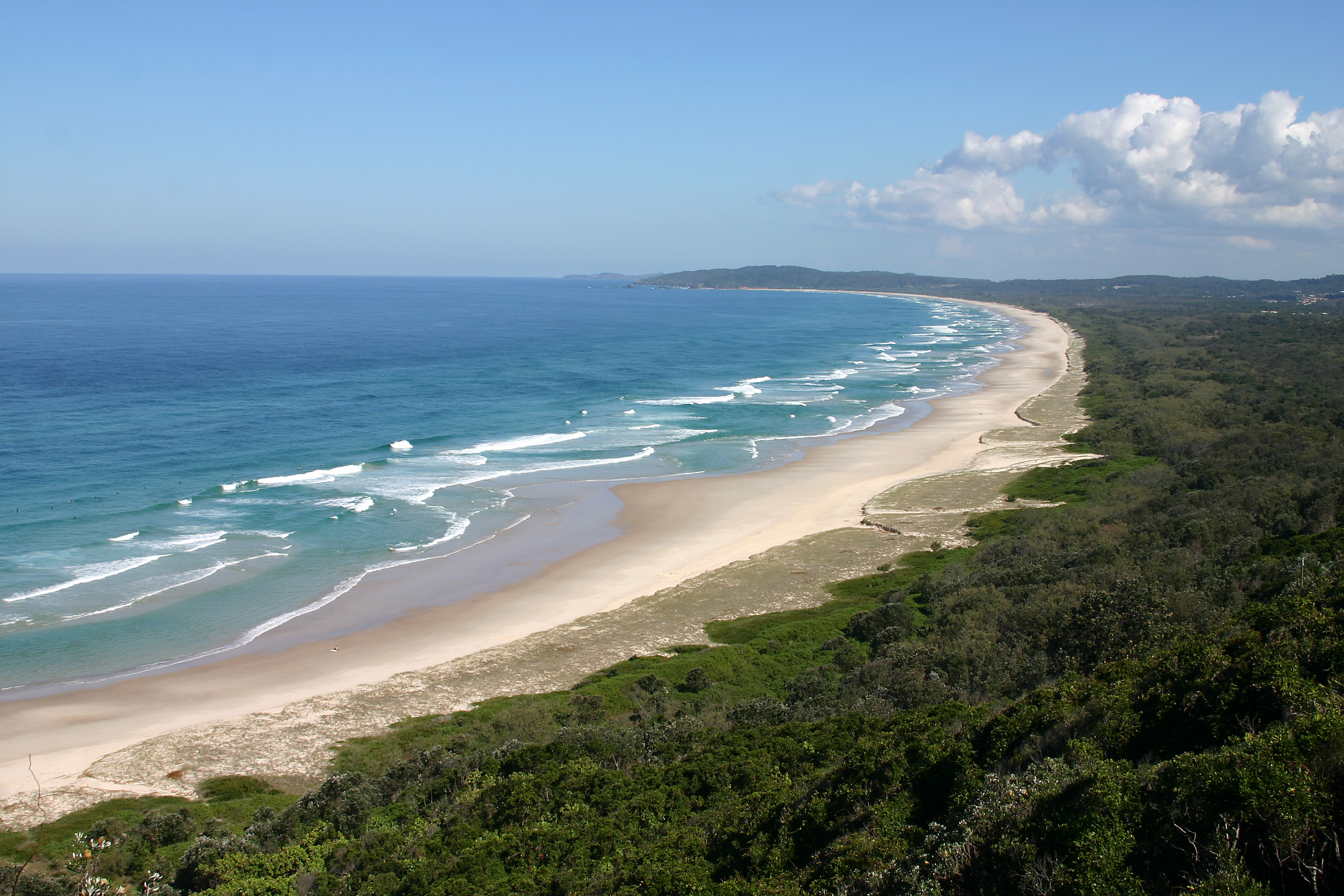
Coastal properties feel climate change price signal
August 23, 2010
Hung Parliament

August 20, 2010
The major parties and ‘corrosive’ welfare

August 19, 2010
Carbon Farming Initiative to fill a policy gap

August 13, 2010
Parliamentary Budget Offices
 According to research conducted by the Organisation for Economic Co-operation and Development (OECD) there has been a growing trend towards greater involvement of national legislatures in budgetary matters in order to increase transparency and accountability of budget processes. The OECD's 2007 project, the International Budget Practices and Procedures database, indicated that out of the 97 countries surveyed, 29 countries had a specialised budget research office and 61 did not. In particular, the survey found that more than half of all the countries included in the study had a larger budgetary role than they had a decade earlier.
August 12, 2010
NATO at the crossroads: where do Australian interests lie?
 Do Australia and NATO have common interests? Given the geographic divide, this might not be an obvious issue, but it was perhaps the central question emerging from a public lecture delivered on 2 August 2010 at the Australian National University by the Chairman of the North Atlantic Treaty Organization’s (NATO) Military Committee, Admiral Giampaolo di Paola. The Chairman emphasised the growing political dimension of the alliance, which finds itself at a strategic crossroads.
August 10, 2010
Australian Government assistance to refugees
 Despite claims made in a series of emails that have been widely circulated throughout Australia, refugees are not entitled to higher benefits than other social security recipients. In recent years, a series of emails have been widely circulated throughout Australia claiming to describe the social security entitlements of refugees, compared with those of other Australian residents.
August 6, 2010
Indigenous Members of Parliament
 The contest for the Western Australia seat of Hasluck is unusual in that three of the seven candidates are Aboriginal Australians: Dot Henry (Independent), Glenice Smith (Greens) and Ken Wyatt (Liberal).
The Liberal candidate Ken Wyatt (pictured opposite) needs a swing of 1 per cent to win the seat from Labor member Sharryn Jackson and become the first Indigenous Member of the House of Representatives.
Building the Education Revolution

The Building the Education Revolution (BER) Implementation Taskforce today released its interim report, finding that while quality infrastructure has been delivered within the required timeframes, project costs in some areas have been substantially higher than would have been the case before the BER.
Subscribe to:
Posts (Atom)