The House of Representatives is currently debating a motion, moved by Independent MP Rob Oakeshott, to introduce a code of conduct covering members of the House of Representatives. The motion is based on the recommendations in the report by the House of Representatives Standing Committee of Privileges and Members’ Interests on a draft code of conduct for members of parliament.
The motion is supported by the Government but the Manager of Opposition Business, Christopher Pyne, has confirmed that the Coalition will not support the motion if the relevant Senate committee has not reported on a code for the upper house. He said that the Coalition had adopted this approach because ‘it would be peculiar if the House of Representatives had a code of conduct and the Senate didn’t'.
The Senate Standing Committee on Senators’ Interests is due to report on a code of conduct for senators on 27 November 2012.

September 18, 2012


September 13, 2012
Homelessness in Australia - official ABS estimates
 |
| Image source: Australian Bureau of Statistics |

The ABS found that, as at the 2006 census, 89 728 Australians were homeless. This represents 0.5 per cent of the Australian population at that time and a rate of 45 homeless people for every 10 000 persons. At the 2001 census, the ABS estimates that 95 314 people were homeless. As such, according to the ABS, between 2001 and 2006 there was a 6 per cent decrease in the number of homeless Australians, and the rate of homelessness fell from 51 homeless people per 10 000 to 45. The main factor contributing to this decline was a fall in the boarding house population.
The ABS’s estimates differ substantially from what were previously assumed to be the most accurate and reliable data on homelessness in Australia—those estimates produced by Chamberlain and McKenzie, and published in Counting the Homeless reports. According to Counting the Homeless data, in 2001 there were 99 000 homeless people whilst in 2006 there were 104 676 homeless. Hence, not only are the ABS homelessness estimates lower than those furnished by the Counting the Homeless figures, but they also contradict the finding that there was an increase in homelessness between 2001 and 2006 of 4.8 per cent. So, the question is, what are the changes that led to this result?
Commonwealth legislating to ban large trawler
 |
| Image source: AFMA |
43rd Pacific Islands Forum in Cook Islands: Australian contributions welcomed
 |
| Image source: Pacific Islands Forum Secretariat |
September 12, 2012
Unhealthy habits on the rise
 |
| Image source: WA Department of Health |
PISA – more than just league tables?
 |
| Image source: Victorian Department of Education and Early Childhood Development |
Much of the discussion about the Australian school system has focussed on the relative (and absolute) decline of Australia in the results from the triennial Programme for International Student Assessment (PISA) over the period 2000 to 2009 despite an increase in real expenditure on school education of 44 per cent over the period. In considering how the school system can be improved, commentators have often looked to the current ‘top 5’ in the PISA rankings—Finland and the four East Asian jurisdictions included in the 2009 survey (Hong Kong, Shanghai, Korea and Singapore).
However, closer analysis of the PISA data suggests that
using the PISA assessment league tables may not be the best measure of the
quality of school systems.
Public sector staffing reductions in the states and territories
Since 2011 the state and territory
governments have introduced public sector staffing reductions as savings
measures (some jurisdictions also had reduction programs in place prior to
2011). A summary of the reductions is provided below; ‘FTE’ is not a headcount
but refers to full-time equivalent staffing levels.
For the Commonwealth Government, the
2012–13 Budget estimates a
staffing reduction in the Australian Public Service of 3 074 FTE for 2012–13 to
be achieved in the main by a combination of natural attrition and voluntary
redundancies. In November 2011 the Government also increased
its efficiency dividend rate to 4.0 per cent for 2012–13 (up from a rate of 1.5
per cent per annum).
In 2011 and 2012 the Queensland, Victorian, New South Wales and Northern Territory Governments commissioned independent reviews of public sector finances,
expenditure and management. The federal Leader of the Opposition has stated that
a Coalition government will establish a commission of audit to review
Commonwealth Government operations.
September 7, 2012
Closure of controversial dental scheme a step closer—but dentists remain in the dark
 |
| Image source: Department of Defence |
September 6, 2012
‘Better schools’ – the Government responds to Gonski
 |
| Image source: Australian Government |
The National Plan outlines a new funding model that will have a Schooling Resource Standard (SRS) for all school students supported by various loadings for disadvantage. This funding model will take place alongside an improvement framework for schools and teaching, with an overarching goal of ensuring that by 2025 Australia is ranked amongst the top five countries in the world for student performance in reading, science and mathematics. In total, the Government expects the National Plan when fully implemented (by 2020) will see an additional $6.5 billion spent on schools each year, in line with the estimates ($5 billion in 2009 prices) in the Gonski Report.
September 5, 2012
Indigenous Expenditure Report 2012
 |
| Image source:2012 Indigenous Expenditure Report |
August 31, 2012
Mifepristone (RU 486) registered for use in Australia

August 30, 2012
UK People Trafficking Assessment Published
 The UK Human Trafficking Centre (UKHTC) has published its first public intelligence assessment of people trafficking in the UK, A Baseline Assessment on the Nature and Scale of Human Trafficking in 2011. This is the first time that government authorities have attempted to describe the nature and scale of people trafficking in the UK.
 August 29, 2012
New dental package announced—but it’s not Denticare
 |
| Image source: NT Health |
From January 2014, children aged 2 to 17 will be entitled to up to $1000 for ‘basic’ dental work over a 2 year period from a dentist of their choice on presentation of their Medicare card. Services funded will reportedly include a dental check-up, scale and clean, fissure sealants, and basic restorative work including fillings, but not more complex work such as orthodontics or crowns. The government estimates some 3.4 million children will be eligible.
August 27, 2012
Who is on Newstart?
 |
| Image source: British Library
|

August 24, 2012
Opposition Leaders suspended from the House of Representatives
On 20 August 2012 Leader of the Opposition, Tony Abbott, was ejected from the House of Representatives. Since Federation no Prime Minister has been suspended or ejected from the House, but Mr Abbott became the fourth Leader of the Opposition to be ordered from the chamber. Three other Opposition leaders have been ordered from the House but their suspensions did not proceed.
August 23, 2012
Community cabinets in Australia
 |
| Image source: DPMC |
More funding for all schools—an update on Gonski
 |
| Image source: Victorian Government |
This newly announced commitment follows the release on the News
Limited website of a list
of 3254 schools (about one-third of all schools) that would lose funding. State
governments and non-government education authorities used data provided by the
Australian Government for their modelling to calculate funding for individual
schools under the Gonski proposals. According to the list, the significant
majority of schools (72 per cent) that would lose funding are government
schools, and the list includes schools in rural areas and special schools. The 2010
funding data referred to in the list is total government recurrent funding
(federal and state and territory) as published on the My
School website.
August 22, 2012
Time for a change? Access to support and visas for trafficking victims
 |
| Image source: United Nations Office on Drugs and Crime |
August 20, 2012
Parliamentary remuneration
Recent legislative changes have given the Remuneration Tribunal the power to determine MPs’ base salary and removed the Parliament’s power to disallow these determinations. Further information on parliamentary salaries and entitlements is available in the Parliamentary Library publications, The basic salary of senators and members Parliamentary remuneration and entitlements and Superannuation benefits for senators and members elected before 2004.
Children in immigration detention
As part of the Government’s response to the Expert Panel on Asylum Seekers, it would appear that children will again be held in processing centres on Nauru. This policy has been subject to sustained criticisms by refugee advocates, human rights groups and government backbenchers. The debate in the Parliament last week reflected this, with many voicing opposition and deep disquiet to the return of such an approach. While not much is known about the arrangements and conditions specifically for children on Nauru in the past, this Flag Post provides a brief history of the effects on children in detention in the Australian context and a summary of some of the key research papers about the impact on children in detention.
 |
| Image source: A last resort? National Inquiry into Children in Immigration Detention |
As part of the Government’s response to the Expert Panel on Asylum Seekers, it would appear that children will again be held in processing centres on Nauru. This policy has been subject to sustained criticisms by refugee advocates, human rights groups and government backbenchers. The debate in the Parliament last week reflected this, with many voicing opposition and deep disquiet to the return of such an approach. While not much is known about the arrangements and conditions specifically for children on Nauru in the past, this Flag Post provides a brief history of the effects on children in detention in the Australian context and a summary of some of the key research papers about the impact on children in detention.
August 17, 2012
Expert panel member provides insight into Asian Century White Paper
 |
| Image source: Department of Prime Minister and Cabinet |
Professor Drysdale reinforced the enormous speed and scale of change in Asia, the major role (even on conservative estimates) that Asia would continue to play in the global economy, and its fundamental importance in shaping Australia’s future growth trajectory in the decades to come.
Trading aviation emissions – Part 3: Australia outlines its position
 |
| Image source: Wikimedia Commons |

August 16, 2012
Report of the Expert Panel on Asylum Seekers and regional processing: legislation before the Senate
 |
| Image source: Australia Awards |
August 15, 2012
Despite the GFC, income support reliance remains low
 |
| Image source: Western Australian Department of Health
|
In this context, it is timely to look at the impact of previous changes to the welfare system and consider what proportion of the working age population is affected by issues being considered by the Committee.
Australia and the Arab-Israeli conflict: from ‘choosing the least of a number of evils’ to ‘strong backers of a two-state solution’
 |
| Image source: Wikimedia Commons |

August 13, 2012
Breaking the deadlock? The Report of the Expert Panel on Asylum Seekers
 |
| Image source: Department of Prime Minister and Cabinet |
On 28 June 2012 the Prime Minister and the Minister for Immigration and Citizenship announced that the Government would establish an expert advisory panel to consider options for “the best way forward for our nation in dealing with asylum seeker issues”. This followed months of political deadlock over how to best manage the issue of increasing numbers of asylum seekers arriving in Australia by boat, following the High Court’s rejection of the Government’s planned transfer arrangement with Malaysia in August 2011.
In February 2012 independent Member Rob Oakeshott introduced a Bill aimed at breaking the deadlock, which was supported by the Government. The Bill passed through the House of Representatives on 27 June 2012 but was defeated in the Senate the following day, with neither the Opposition nor the Greens prepared to support it, albeit for very different reasons. With few options left available to it, the Government announced the creation of a panel to provide expert advice on the best way forward.
August 6, 2012
Managing the performance of the health care system
 |
Image source: Health Statistics New South Wales
|
Performance of the health care system was put on the national agenda in 2010 when the then Prime Minister Kevin Rudd outlined his vision for the National Health and Hospital Network (NHHN). One of the features of the NHHN was improved reporting and performance standards. The precursor to this were the objectives, outcomes, progress measures and outputs that were agreed by the Council of Australian governments (COAG) in 2008 as part of the National Healthcare Agreement (NHA). Although aspects of the NHHN were re-negotiated, the commitment to improved transparency and accountability remained.
August 3, 2012
Socioeconomic dimensions of pokie machine losses
 |
| Image source:
|
August 2, 2012
Melbourne by-election results for the Greens
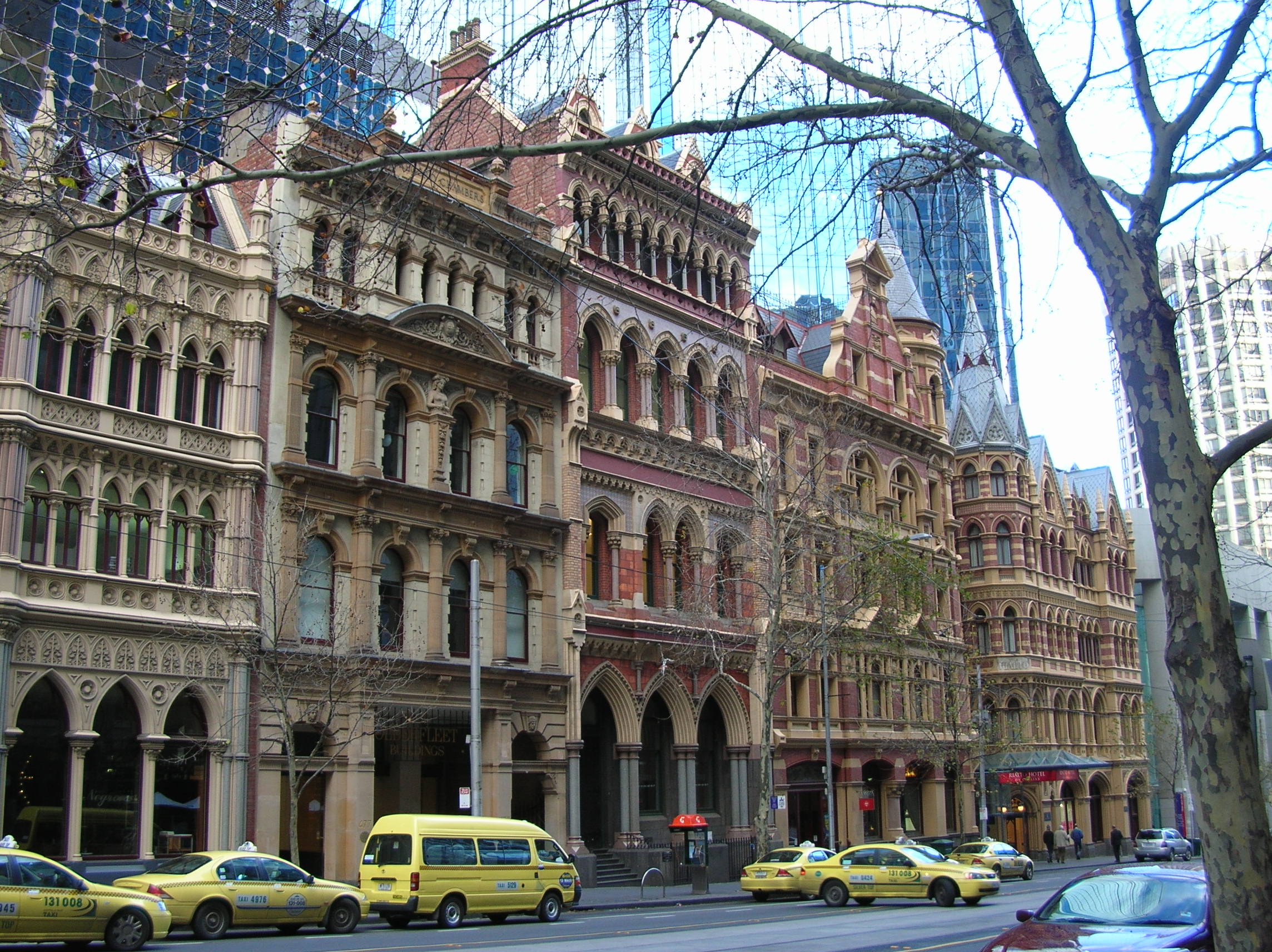 |
| Collins Street, Melbourne CBD Image source: Wikimedia Commons |

A by-election was conducted for the Victorian state electorate of Melbourne on Saturday 21 July 2012. Vote-counting and rechecking has now been completed, with the ALP emerging as the winning party with 51.51 per cent of votes after distribution of preferences.
August 1, 2012
Australia’s current debt position – update July 2012
In recent times a lot has been spoken about Australia’s debt level. This was no more evident than in the lead up to the last Federal election where it seemed to dominate debate. This article updates the data published in an earlier FlagPost titled Australia’s current debt position. I therefore intend in this article to report the latest available data on Australia’s level of debt for both the public and private sectors in gross and net terms. For more information on gross and net debt the reader is referred to the earlier FlagPost.
July 25, 2012
Sitting comfortably? How sitting is affecting our health
 |
| Image: Department of Immigration |

July 24, 2012
The consequences of a poor anti-money laundering program: the HSBC case study
 |
| Image source: Flickr user photobunny |
July 10, 2012
Staying on at school is not just a matter of money
There is considerable evidence about the correlation between socio-economic status (SES)–particularly parental income, education and occupation–and educational attainment. Hence the inclusion of a measure of SES on the Myschool website, which allows for the comparison of ‘SES-equivalent’ schools, and higher education institutions receiving funding on the basis of meeting targets for the representation of students from low SES backgrounds.
While traditional SES measures may allow for comparisons or targets, they provide little guidance to policy makers on how to overcome such disadvantage–it is generally not possible to change the education level of a student’s parent for example. However a new study has emphasised the role of student characteristics–aspirations, poor school experience and participation in activities such as smoking and alcohol consumption–which may prove more amenable to direct policy interventions.
 |
| Image: Victorian Government |
While traditional SES measures may allow for comparisons or targets, they provide little guidance to policy makers on how to overcome such disadvantage–it is generally not possible to change the education level of a student’s parent for example. However a new study has emphasised the role of student characteristics–aspirations, poor school experience and participation in activities such as smoking and alcohol consumption–which may prove more amenable to direct policy interventions.
July 9, 2012
Australia’s performance against Anti-corruption treaty reviewed
 |
| Image source: Commonwealth Ombudsman |
July 5, 2012
SBY’s visit – the bigger picture

At the second Indonesia-Australia Leaders’ Meeting in Darwin on 3 July, Prime Minister Julia Gillard and President Susilo Bambang Yudhoyono re-affirmed the two countries’ ‘comprehensive strategic partnership, based on a mutual commitment to each other’s progress, prosperity and security’. The
Joint Statement agreed by the two leaders highlights cooperation across a range of issues, including regional institutional architecture, trade, defence and maritime cooperation, policing, development assistance, and people-to-people links.
What can be done about the social determinants of health?
 |
| Image source: World Health Organization |
July 3, 2012
Trafficking in Persons Report 2012
 |
June 29, 2012
Appliance energy ratings get the standard treatment
 |
| Image source :ACT government |
New Place Based Income Management to commence 1 July
 |
| Image: Bankstown Railway Station (Wikimedia Commons) |

So, how will the new Place Based Income Management operate and how does it differ from existing forms? Why base it in particular areas? What do we know about whether or not it is likely to be successful?
June 28, 2012
Update on statistics for boat arrivals
The Parliamentary Library produces a number of publications about asylum seekers and immigration. The publication, Boat arrivals in Australia since 1976 provides a brief overview of the historical and political context surrounding boat arrivals in Australia. An update of the statistical appendix on boat arrival figures is provided below. Please note that the publication has not yet been formally updated.
June 27, 2012
Trafficking in Persons - Special Rapporteur's Report to the Human Rights Council
 On 22 June, Joy Ngozi Ezeilo, the Special Rapporteur on Trafficking in Persons especially women and children, presented her annual report to the United Nations Human Rights Council, including reports of her missions to Thailand and Australia.
Special Rapporteurs are independent experts appointed by the United Nations Human Rights Council (formerly the Commission on Human Rights) to investigate, monitor, and advise on human rights violations – world wide or in specific countries. In carrying out her mandate, the Special Rapporteur undertakes country visits to study the situation on the ground and, develop recommendations to better prevent or combat trafficking and protect the human rights of its victims; and takes action on complaints about human rights violations against trafficked persons.
June 26, 2012
Australia's tertiary students - the latest snapshot
The National Centre for Vocational Education Research (NCVER) has just released Tertiary Education and Training 2010, an annual publication that compares vocational education and training (VET) and higher education on a range of key measures.
It draws on data from the National VET Provider Collection and the Higher Education Statistics Collection.
It draws on data from the National VET Provider Collection and the Higher Education Statistics Collection.
June 22, 2012
How's it going? Australia's Health 2012
The thirteenth report on Australia's health was released by the Australian Institute of Health and Welfare (AIHW) on 21 June 2012. The AIHW describes Australia's Health 2012 as 'the most comprehensive and authoritative source of national information on health in Australia', and many would not disagree. Produced biennially since 1988, the report has grown both in size and stature as a reliable report card on the status of the country's health and the services and resources that deliver and support it. A companion In brief publication was also released.
 |
| Source: AIHW |
Is $325 million enough for Tasmania's health care system?
Last week, after much speculation, the Federal Government announced that it would provide an extra $325 million over four years to Tasmania’s health care system. Previously the Tasmanian Government had announced cuts of up to $500 million over four years to the health care system, commencing from 1 July 2011. Many of these cuts were directed to elective surgery, reduced services and the closure of hospital beds. The most recent Tasmanian budget (May 2012) announced a reduction of the savings target by $120 million.
 |
| Image source: www.yourhealth.gov.au |
2011 Census release
 |
| Image Source: http://www.abs.gov.au/ |
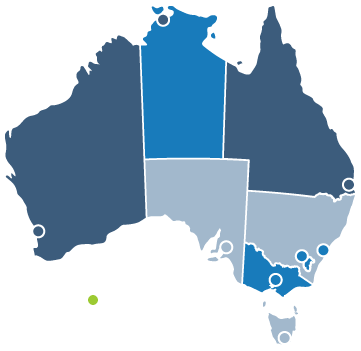
Australia’s migrant population is growing and changing
In the decade to 2011, the proportion of the population who were born overseas increased from 27.4% to 30.2%.
Over the same period, the proportion of Australians with at least one parent born overseas increased from 42.7% to 46.3%
There was a shift away from Europe and towards Asia.
- The number born in India more than trebled, from 95 452 in 2001 to 295 362 in 2011.
- The number born in China (excludes SARs and Taiwan) more than doubled from 142 780 to 318 969.
June 21, 2012
Income management: some answers to key questions
 |
| Image: BasicsCard kiosk, (Centrelink) |

While the policy of income management of welfare payments has been highly controversial, the specific details of its various forms are not generally well understood.
The Parliamentary Library has released a Background Note seeking to address this lack of understanding. It provides a brief overview of the history of income management and responses to a number of key questions about the policy.
June 19, 2012
New marine reserve proposals
 |
| Image source: Wikimedia Commons |

June 15, 2012
Hearing impairment—the silent barrier to Closing the Gap
 |
| Image source: Northern Territory Government |
Dissecting the growth of vocational education and training in Victoria
 |
| Image source: Victorian Government |
Amid this debate, the National Centre for Vocational Education Research (NCVER) has released preliminary Students and Courses data for 2011. The full publication (due in July) provides data on the numbers of students, subject enrolments, hours of delivery and qualifications in Australia’s public vocational education and training (VET) system.
The preliminary data reveals some interesting results for one state in particular: Victoria.
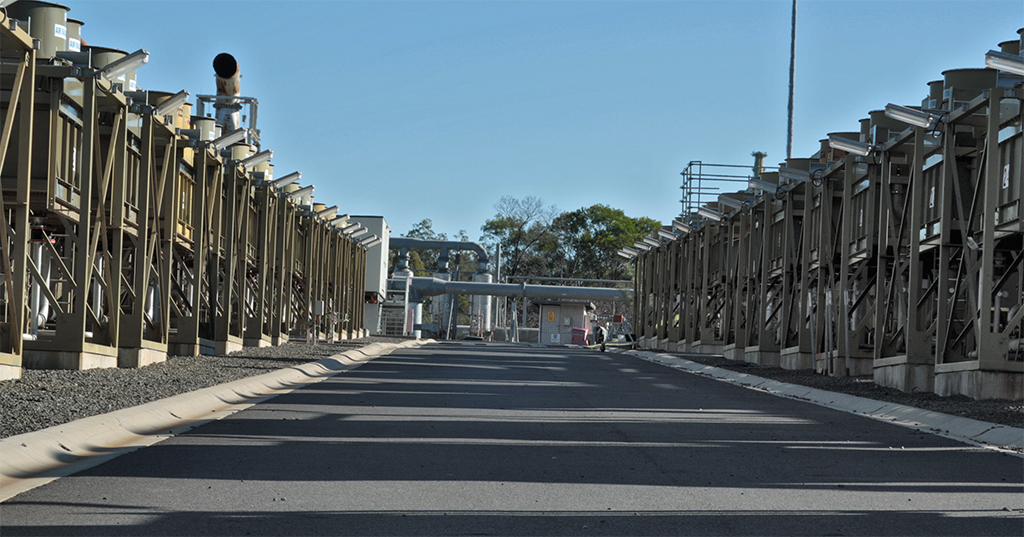
The deeper worries about coal seam gas
 |
| Image source: WikiMedia Commons |

People trafficking, forced marriage and slavery offences
The Crimes Legislation Amendments (Slavery, Slavery-like Conditions and People Trafficking) Bill 2012 was introduced into the House of Representatives on 30 May 2012. This Flagpost is a skeleton of a larger project.
If passed in its current form, this Bill will:
If passed in its current form, this Bill will:
- expand the definition of slavery to include physical and psychological threats, coercion and deception
- expand the servitude and exploitation offences to not be limited to sexual servitude
- create new offences for aggravated slavery-like offences.
- create new offences for forced marriage
- create new offences for harbouring or receiving a trafficking or slavery victim
- increase the penalties for debt bondage offences
World Refugee Day
 |
| Image source: http://www.unhcr.org/ |
June 13, 2012
Burma's economy—the long road ahead
 |
| Image source: Wikimedia Commons |
June 12, 2012
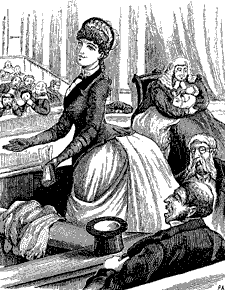
110th anniversary of the Commonwealth Franchise Act 1902
 |
| Image source: Wikimedia Commons |
June 4, 2012
Astronomical events
 |
| Image source: WA Department of Commerce via myregion.gov.au |
On 6th June 2012, just before 8:30 am along the east coast of Australia, the tiny dot of the planet Venus will again pass slowly across the face of the Sun, as seen from Earth. Such ‘Transits of Venus’ are infrequent events; the next transit does not occur until 2117 so this is one for us to savour. Many smaller observatories here will be trained on this solar event.
A labour market for the resources sector – what are Enterprise Migration Agreements?
 |
| Image source: Western Australia Department of Mines and Petroleum |
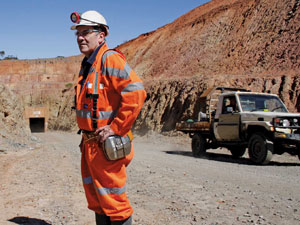
The Immigration Minister’s recent announcement that an Enterprise Migration Agreement (EMA), facilitating the recruitment of temporary overseas workers, had been granted to the Roy Hill project in the Pilbara appears to have taken many observers by surprise. It shouldn’t have.
June 1, 2012
New unit to lower health insurance premiums and improve competition
 |
| Image: Private Health Insurance Administration Council |
Subscribe to:
Posts (Atom)