September 17, 2010

Managing asylum flows

Irregular arrivals—what is the solution?
Over the last decade, the immigration debate in Australia has been largely overshadowed by the issue of asylum seekers arriving by boat (irregular arrivals). The issue took centre stage in the 2001 federal election when former Prime Minister John Howard asserted ‘we’ll decide who comes to this country and the circumstances under which they’ll come’. A widespread perception in the community that Australia is being swamped by undocumented asylum seekers continues to strongly influence government policy (see our publications Asylum seekers and refugees: what are the facts? and Boat arrivals in Australia since 1976 for more on this). Successive governments have been under constant pressure to adopt effective measures to address border security and combat people smuggling. This continues to be an emotive and divisive election issue, the 2010 federal election being no exception.

September 15, 2010

Sydney's Medically Supervised Injecting Centre

After around ten years of operating on a trial basis, the New South Wales Government has indicated that it intends to make Sydney’s Medically Supervised Injecting Centre (MSIC) a permanent facility. Despite the MSIC’s success in saving lives and reducing the incidence of infectious disease, the NSW Government has until now chosen not to grant it a more permanent status. This has been despite ongoing calls from medical experts and the Centre’s operator, Uniting Care, to lift the trial period and make the centre permanent.

September 8, 2010

National disability insurance and the new parliament

Australia’s hung parliament has raised questions about the future of large-scale economic reforms such as emissions trading, the mining tax and national broadband. One significant potential reform in the social policy area over which there may also be uncertainty is national disability insurance.

In recent years, there have been increasing calls from within the disability sector in Australia for the introduction of a new, national, long-term mechanism for funding support for people with disability—known as national disability insurance.

September 6, 2010

Dental care—holes to be filled

Calls for urgent action on dental care have been a feature of public debate in recent years and were raised yet again in the context of the recent Federal election. The issue remains high on the agenda, as evidenced by the recent agreement between the Greens and Labor which included a commitment to improving investments in dental care.

September 2, 2010

Iran's first nuclear power plant: a proliferation threat?


On 21 August 2010, Russian engineers began loading fuel into the Bushehr nuclear reactor in southern Iran. Once the start-up is complete, Bushehr will be the first operational nuclear power plant in the Middle East.

September 1, 2010

Seeking asylum: Australia's humanitarian response to a global challenge

Australia currently accepts about 13 750 refugees and other humanitarian entrants each year, but there remains a great deal of confusion surrounding the details of Australia's humanitarian responses and the complex visa arrangements involved. This new Parliamentary Library Background Note, Seeking asylum: Australia's humanitarian response to a global challenge, aims to clarify some of these issues. It looks at the differences between the offshore and onshore components of Australia's Humanitarian Program and includes some useful statistics dating back to 1945. Other related papers published recently include: Asylum seekers and refugees: what are the facts?; Australian Government assistance to refugees: fact v fiction; and Boat arrivals in Australia since 1976.
(Image sourced from Multicultural Arts Victoria, Refugee and Asylum Seekers Festival, 2005)

August 31, 2010

Making sense of migration statistics

Many statistics on both permanent and temporary migration are often used incorrectly and add to the confusion and misinformation regarding migration levels and population growth. This new Background Note, Migration to Australia since federation: a guide to the statistics, offers an easy entry-point to the relevant data on migration flows to Australia. The guide also offers background information on Australia's migration programs and on the reliability and use of different statistical sources.

Senate majority

Between 1910 and 1949, the government party controlled both houses for most years. If a government controls both houses of parliament it is likely to have unfettered power to push its legislation through the upper house. In the years since the 1949 election it has been more usual that neither major party has had an absolute majority. In fact, since 1949 the only periods of a government majority in the Senate have been 1951–6, 1959–62, 1975–81 and 2005 to 2007. In the periods when the government has not had control of the upper house the Senate is often accused of being 'obstructionist'.

August 26, 2010

Early election

The House of Representatives that is emerging from the 2010 election, and the fact that the next government will be a minority government, raises the spectre of the electorate going to the polls well before the next federal election would otherwise be expected. If an election takes place prior to mid-2013 it will only be for the House of Representatives and the territory senators; the rest of the Senate will not be in play unless there is a double dissolution.

Asia and the Australia-US alliance

What challenges lie in wait for Australia-US relations in the aftermath of the federal election? Although the alliance relationship has been historically close, the Asia-Pacific region is one issue over which Australia and the US appear to have divergent approaches.

Addressing poorer health in rural areas

During the election campaign, the National Rural Health Alliance released its Election Charter 2010. The metropolitan media paid little attention to this document and its proposed 10 key priorities to address rural health problems. Top of the list was the priority to improve the sustainability of rural communities; other top priorities included equity in funding, improvements to primary care services, workforce development and improving the health of Aboriginal and Torres Strait islander peoples. With some of the rurally based Independent MPs reportedly citing health services in the bush as a priority, the issue of rural health services may gain national prominence.

August 25, 2010

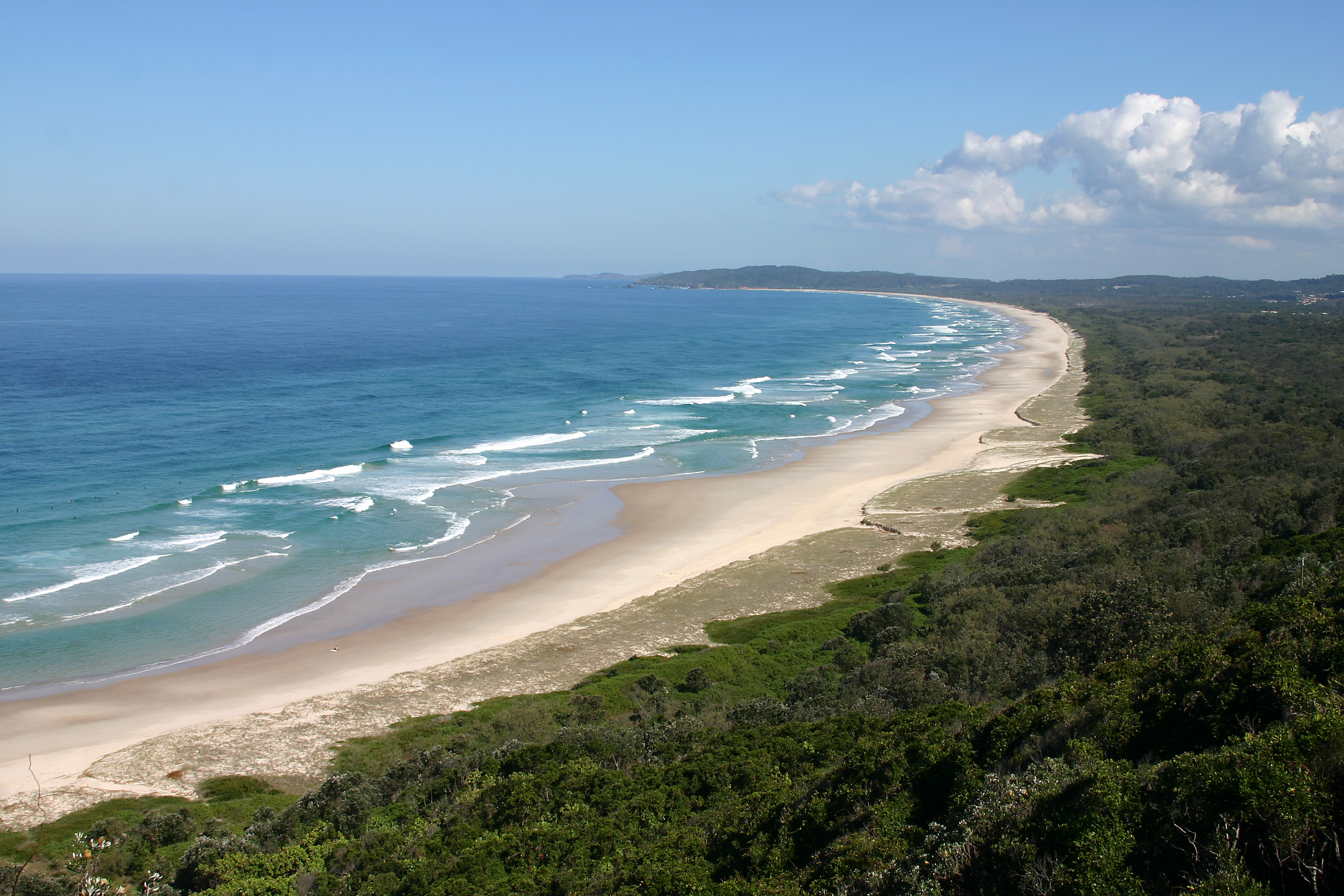
Coastal properties feel climate change price signal

The NSW Valuer-General has announced a significant cut in the valuation of beachfront properties at Belongil Beach on the Northern NSW coast. Although this will only affect the the calculation of rates and levy land tax, it sends a signal to those living in these areas and their insurers. This assessment by the Valuer-General comes after the release of the NSW coastal planning guidelines, which states that

August 23, 2010

Hung Parliament

The last hung Federal Parliament occurred after the election on 21 September 1940 when Labor and the Coalition of the United Australia Party and the Country Party emerged with 36 seats each in the House of Representatives. The balance of power resided with two independents, Alex Wilson and Arthur Coles, who supported the Coalition and thus enabled the Menzies Government to remain in office (it was sworn in on 28 October). The independents' support lasted until late 1941 when they voted against the budget of the now Fadden-led Coalition Government, leading to the resignation of Fadden and the commissioning of the Curtin Labor Government on 7 October 1941.

August 20, 2010

The major parties and ‘corrosive’ welfare

Where do the major parties stand on welfare policy? In what direction can we expect welfare policy to be taken throughout the course of the next parliament? One thing clear from the election policy announcements of the major parties is that there is likely to be a further strong emphasis on addressing what each describes as the ‘corrosive’ effects of welfare.

August 19, 2010

Carbon Farming Initiative to fill a policy gap


The Government has announced that if re-elected it will introduce a new regime for landholders, the Carbon Farming Initiative. This will encourage farmers to either minimise carbon emissions or maximise carbon sequestration by altering their forestry and agricultural practices. The initiative would fill the policy gap that has existed since the termination of the Greenhouse Friendly scheme in July 2010.

August 13, 2010

Parliamentary Budget Offices

According to research conducted by the Organisation for Economic Co-operation and Development (OECD) there has been a growing trend towards greater involvement of national legislatures in budgetary matters in order to increase transparency and accountability of budget processes. The OECD's 2007 project, the International Budget Practices and Procedures database, indicated that out of the 97 countries surveyed, 29 countries had a specialised budget research office and 61 did not. In particular, the survey found that more than half of all the countries included in the study had a larger budgetary role than they had a decade earlier.

August 12, 2010

NATO at the crossroads: where do Australian interests lie?

Do Australia and NATO have common interests? Given the geographic divide, this might not be an obvious issue, but it was perhaps the central question emerging from a public lecture delivered on 2 August 2010 at the Australian National University by the Chairman of the North Atlantic Treaty Organization’s (NATO) Military Committee, Admiral Giampaolo di Paola. The Chairman emphasised the growing political dimension of the alliance, which finds itself at a strategic crossroads.

August 10, 2010

Australian Government assistance to refugees

Despite claims made in a series of emails that have been widely circulated throughout Australia, refugees are not entitled to higher benefits than other social security recipients. In recent years, a series of emails have been widely circulated throughout Australia claiming to describe the social security entitlements of refugees, compared with those of other Australian residents.

August 6, 2010

Indigenous Members of Parliament

The contest for the Western Australia seat of Hasluck is unusual in that three of the seven candidates are Aboriginal Australians: Dot Henry (Independent), Glenice Smith (Greens) and Ken Wyatt (Liberal).

The Liberal candidate Ken Wyatt (pictured opposite) needs a swing of 1 per cent to win the seat from Labor member Sharryn Jackson and become the first Indigenous Member of the House of Representatives.

Building the Education Revolution

The Building the Education Revolution (BER) Implementation Taskforce today released its interim report, finding that while quality infrastructure has been delivered within the required timeframes, project costs in some areas have been substantially higher than would have been the case before the BER.