 |
| Image source: Wikimedia Commons |

June 12, 2012
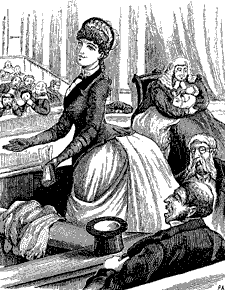
110th anniversary of the Commonwealth Franchise Act 1902


June 4, 2012
Astronomical events
 |
| Image source: WA Department of Commerce via myregion.gov.au |
On 6th June 2012, just before 8:30 am along the east coast of Australia, the tiny dot of the planet Venus will again pass slowly across the face of the Sun, as seen from Earth. Such ‘Transits of Venus’ are infrequent events; the next transit does not occur until 2117 so this is one for us to savour. Many smaller observatories here will be trained on this solar event.
A labour market for the resources sector – what are Enterprise Migration Agreements?
 |
| Image source: Western Australia Department of Mines and Petroleum |
The Immigration Minister’s recent announcement that an Enterprise Migration Agreement (EMA), facilitating the recruitment of temporary overseas workers, had been granted to the Roy Hill project in the Pilbara appears to have taken many observers by surprise. It shouldn’t have.
June 1, 2012
New unit to lower health insurance premiums and improve competition
 |
| Image: Private Health Insurance Administration Council |
May 30, 2012
Australian elections in the next four years
There are between four and seven elections at the federal, state/territory or local government level each year. From now to the end of 2015 there will be one federal election, eight state or territory elections and seven local council elections. This does not include supplementary elections, by-elections or separate legislative council elections.
By the end of 2012 there will have been three state/territory elections (Queensland in March, the Northern Territory in August and the Australian Capital Territory in October) and four sets of local council elections across the Northern Territory in March, Queensland in April, New South Wales in September and Victoria in October.
The expulsion of Syrian diplomats
 |
| Image source: Voice of America |
May 28, 2012
Immigration detention: what are the alternatives?
Since 1992 when the policy of mandatory detention was introduced in Australia, the detention of asylum seekers arriving unauthorised by boat has received a great deal of public attention. In particular, the duration and conditions of their detention have been controversial issues that have plagued successive governments since the early 1990s when there were several hunger strikes, rooftop demonstrations and suicide attempts at Villawood and Port Hedland immigration detention centres.
 |
| Image source: http://www.immi.gov.au/ |
May 24, 2012
Codes of conduct for members of parliament
Many Australian and overseas parliaments have put in place codes of conduct covering ministers and members of parliament. Some parliaments have ethics or integrity commissioners to advise members on their code, while others have external bodies empowered to investigate members' conduct.
The federal Parliament is currently considering the arguments for and against a members' code of conduct and the benefits of establishing a National Integrity Commission.
A Parliamentary Library Background Note on parliamentary codes of conduct around Australia and in selected overseas jurisdictions has been updated to reflect some recent developments.
The following table summarises the codes of conduct operating in Australian parliaments:
Celebrating the 50th anniversary of Indigenous federal voting rights
 |
| Source: http://www.indigenous.gov.au/ |
In March 1962 the Commonwealth Electoral Act 1918 was amended to enable Indigenous people to enrol to vote in federal elections, but it was not compulsory for them to enrol. It was made an offence for anyone to use undue influence or pressure to induce them to enrol. Once they enrolled, however, voting was compulsory.
Same sex families
 |
| Image source:www.goodenoughmother.com |
One research review conducted in 1996 noted that the results are ‘exceptionally clear’ and ‘yield a picture of families thriving even in the midst of discrimination and oppression’:
May 23, 2012
Schapelle Corby granted clemency by Indonesian President
In April 2012, Indonesia’s Justice and Human Rights Ministry recommended Schapelle Corby’s jail sentence be reduced by ten years, on humanitarian grounds. Corby, now 34, is said to be suffering from mental illness. President Susilo Bambang Yudhoyono signed a letter on 15 May granting Corby clemency, cutting five years off her 20 year prison term. This is particularly significant as previously the Indonesian President has stated that he would not use his power of clemency in favour of drug offenders. This may have consequences for other Australians seeking clemency from the President, Andrew Chan and Myuran Sukumaran of the “Bali 9”.
May 22, 2012
New Zealand: Foreign Charter Vessels to be reflagged
 |
| Image source: Oyang 70, Photo by New Zealand Defence Force |
Commercial fishing in New Zealand is managed by a quota system, with all fishing quota owned by New Zealand companies. Foreign Charter Vessels (FCVs) are foreign owned and flagged fishing vessels leased by a New Zealand company to fish in New Zealand's Exclusive Economic Zone. As discussed in a Flagpost last year, the then Minister for Fisheries and Aquaculture, the Hon Phil Heatley MP, and the Minister for Labour, the Hon Kate Wilkinson MP, had jointly convened a ministerial inquiry into the use and operation of FCVs. This followed reports of serious abuse and exploitation of crew of commercial fishing fleets operating in New Zealand waters.
May 21, 2012
Latest Illicit Drug Data Report released
 |
| Image source: Australian Crime Commission |
May 17, 2012
‘For a Few Dollars More’: DFAT identifies priority posts
 |
| Image source: Wikimeida Commons |

Do alcohol health warning labels work?
On 24 May the House of Representatives Social Policy and Legal Affairs Committee is to hold a roundtable with alcohol industry representatives, through which it will canvass their views on health warning labels on alcohol containers, including specific warnings for pregnant women. On 31 May, the Committee will hold a similar hearing with public health and alcohol and drug non-government organisations. The Committee is also currently conducting an inquiry into the incidence and prevention of foetal alcohol spectrum disorder.
The hearings are being held in a context in which the Government has recently committed to certain alcohol labelling reforms in response to the recommendations of the Independent Review of Food Labelling Law and Policy. The Government has in its response taken account of the fact that, last year, the alcohol industry began voluntarily introducing new consumer information messages on the labels of alcohol products sold in Australia.
Perhaps the key issue that is likely to be considered in the course of the hearings is the question of whether or not alcohol health warning labels are effective in reducing alcohol-related harm. This question is the subject of a new Parliamentary Library paper, Alcohol warning labels—do they work? The paper provides a brief summary of some of the research evidence on the effectiveness of alcohol warning labels and a succinct overview of the context for the Government’s proposed labelling reforms.
In short, the paper finds that, based on the research evidence, alcohol health warning labels may increase consumers’ awareness of the risks associated with excess alcohol consumption. However, this increased awareness does not necessarily result in behavioural changes in those groups that are at highest risk of experiencing alcohol-related harms.
If alcohol health warning labels are to have any chance in spurring positive changes in drinking behaviours, then the evidence indicates that the messages they convey need to meet two main criteria. Firstly, they need to be arresting in their presentation of health risks, similar to those messages included on tobacco labels. And, secondly, they need to be varied reasonably frequently in order to counter consumer complacency.
Arguably, the new consumer information messages to be included on alcohol products by the alcohol industry do not meet the first of these criteria. And, given that this is the case, the paper suggests that they are unlikely to be particularly successful in contributing to a reduction in alcohol-related harms.
 |
| Image source: ABC |
The hearings are being held in a context in which the Government has recently committed to certain alcohol labelling reforms in response to the recommendations of the Independent Review of Food Labelling Law and Policy. The Government has in its response taken account of the fact that, last year, the alcohol industry began voluntarily introducing new consumer information messages on the labels of alcohol products sold in Australia.
Perhaps the key issue that is likely to be considered in the course of the hearings is the question of whether or not alcohol health warning labels are effective in reducing alcohol-related harm. This question is the subject of a new Parliamentary Library paper, Alcohol warning labels—do they work? The paper provides a brief summary of some of the research evidence on the effectiveness of alcohol warning labels and a succinct overview of the context for the Government’s proposed labelling reforms.
In short, the paper finds that, based on the research evidence, alcohol health warning labels may increase consumers’ awareness of the risks associated with excess alcohol consumption. However, this increased awareness does not necessarily result in behavioural changes in those groups that are at highest risk of experiencing alcohol-related harms.
If alcohol health warning labels are to have any chance in spurring positive changes in drinking behaviours, then the evidence indicates that the messages they convey need to meet two main criteria. Firstly, they need to be arresting in their presentation of health risks, similar to those messages included on tobacco labels. And, secondly, they need to be varied reasonably frequently in order to counter consumer complacency.
Arguably, the new consumer information messages to be included on alcohol products by the alcohol industry do not meet the first of these criteria. And, given that this is the case, the paper suggests that they are unlikely to be particularly successful in contributing to a reduction in alcohol-related harms.
May 3, 2012
Korea passes ETS but details are hazy
 |
| A steel plant in South Korea Image source: Wikimedia Commons |

Fuel tax credits: are they a subsidy to fuel use?
 |
| Image source: Victoria DPI |
May 2, 2012
Changes to community care
 |
| Image source: Aged Care Australia |
Changes will also be made to the payment arrangements for community aged care. From 1 July 2014, older Australians may be asked to contribute to the costs of their care via a Care Fee (it appears that whether fees will be charged will be at the discretion of the provider). These fees will be means tested and will be paid in addition to the Basic Fee which is currently charged.
Paying for aged care - should the family home be counted?
 |
Image source: National Museum of Australia
|
One of the long running debates in the financing of aged care in Australia is the treatment of the family home and whether is should be included in any asset or mean-testing calculations when individuals access publicly funded aged care. In its recent report to the Government, the Productivity Commission (PC) put forward two recommendations (7.3 and 8.1) that would draw on the value of the family home to finance the costs associated with aged care.
Is income management working?
Much of the debate surrounding income management of welfare payments has related to the question of evidence. That is, is there evidence to justify the policy? Alternatively, is there evidence of policy failure or harmful consequences arising from income management? In other words, is income management working?
Income management (also known as ‘welfare quarantining’) refers to a policy under which a percentage of the welfare payments of certain people are set aside to be spent only on ‘priority goods and services’ such as food, housing, clothing, education and health care. Introduced by the Howard Government in 2007, income management has been criticised by some as paternalist and stigmatising.
 |
| Image: BasicsCard kiosk (Centrelink) |

Income management (also known as ‘welfare quarantining’) refers to a policy under which a percentage of the welfare payments of certain people are set aside to be spent only on ‘priority goods and services’ such as food, housing, clothing, education and health care. Introduced by the Howard Government in 2007, income management has been criticised by some as paternalist and stigmatising.
Subscribe to:
Posts (Atom)