October 31, 2011

Who's counting? Seven billion and growing


According to the United Nations (UN), the 31st of October 2011 is the day the world’s population officially reaches seven billion. However, it is not possible to absolutely calculate at which point in time the seven billionth person will be born. The US Census Bureau does not estimate the population reaching seven billion until February 2012, so the 31st of October is more symbolic. However, sometime in the very near future the world’s population will reach this milestone.


October 28, 2011

How many venues would be affected if mandatory pre-commitment is implemented in 2012?


ABC News Online
 A significant proportion of gaming venues will be exempt from the proposed reforms to electronic gaming machines (EGMs), at least until 2018. Mr Wilkie's proposal is for venues to introduce mandatory pre-commitment on high intensity EGMs or deploy low intensity machines which have been configured to limit losses to around $120 per hour (or a combination of the two). But the Joint Select Committee on Gambling Reform Committee Mr Wilkie chaired on the proposed mandatory pre-commitment scheme also recommended (see recommendations 39 & 40 of the Committee's report) that venues with 15 or fewer machines, and those in rural and regional Australia, be exempt from this requirement until 2018. This was in recognition that smaller venues may require special consideration and assistance regarding the implementation timeframe and costs.

October 27, 2011

Is counselling for pokie addiction an effective harm minimisation measure?

Source: ABC online
At a rally at the Canterbury RSL in western Sydney on Tuesday evening, the opposition leader Tony Abbott predicted a future Coalition government would rescind any legislation that introduces mandatory pre-commitment on electronic gaming machines (EGMs). Instead of mandatory pre-commitment, he suggested a greater focus on individual counselling for problem gamblers is needed.

October 18, 2011

Australia's record at the WTO


If success is measured by a win/loss record, then Australia has done remarkably well in the WTO dispute settlement system despite losing its recent appeal against New Zealand apple imports. Since the WTO dispute settlement system was created in 1995 Australia has been actively involved in 17 disputes in the WTO as a complainant and a defendant. Australia has won five of the seven cases it has prosecuted and lost three of the ten cases brought against it.

October 12, 2011

The hung Parliament: the first year

Image source: Wikimedia
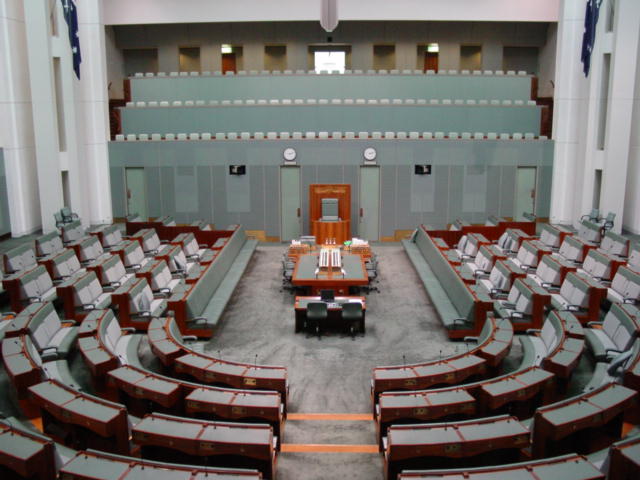
On 7 September 2010 an agreement was formulated between the ALP, Rob Oakeshott and Tony Windsor which, together with other agreements, gave the Labor Party the support it needed to form a minority government. A major component of the agreement with Mr Oakeshott and Mr Windsor was an annex, Agreement for a Better Parliament: Parliamentary Reform, which was negotiated by the ALP, the Coalition and the independents. The Agreement for a Better Parliament identified a range of changes to House of Representatives procedure and practice, many of which were subsequently implemented through changes to the House of Representatives Standing Orders.

Strategic Review of the Student Visa Program


Image source: The University of Sydney

On 22 September 2011 the Government released the Strategic Review of the Student Visa Program 2011(the Knight Review), along with its response to the Review’s 41 recommendations.

The Review recommends making some significant changes to visa processing, and post-study work rights, for students in the university sector. It also recommends some minor changes to the student visa program across other education sectors, and to the integrity measures applied by the Department of Immigration and Citizenship (DIAC) in monitoring and enforcing student visa compliance.

The Government has responded positively to the Review’s recommendations, and announced some significant reforms to the student visa system.

October 6, 2011

A return to the Six-Party Talks?

Image sourced from: Joseph A Ferris III on Flikr
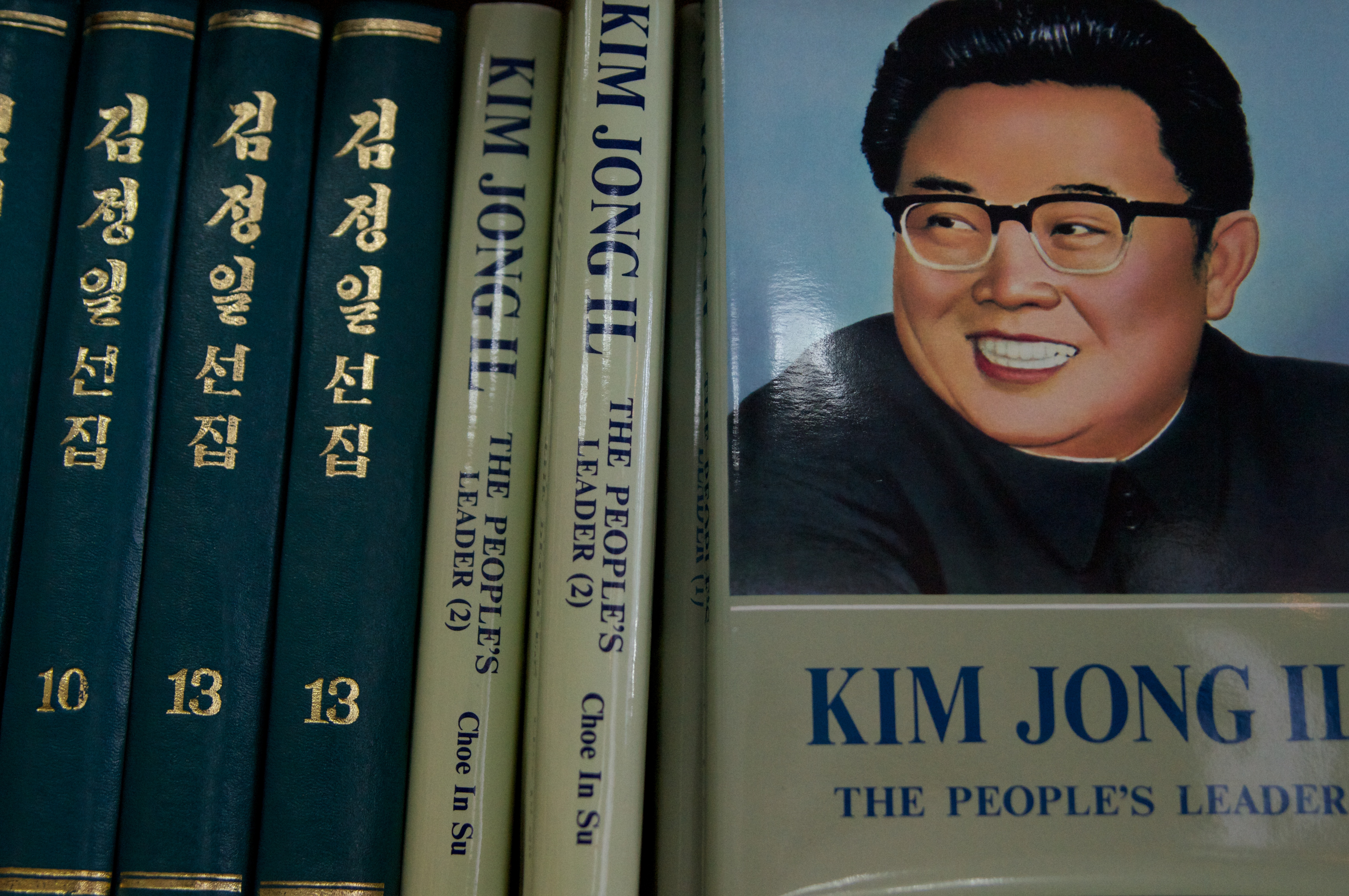
In diplomacy, as in comedy, timing is everything. Recent diplomatic signals suggest that the time for a return to the Six-Party Talks on North Korea's nuclear weapons program has arrived—even if the incentives of the participating countries do not match.

The Six-Party Talks, involving North Korea, South Korea, China, Russia, Japan and the United States, seek a negotiated end to the North Korean nuclear weapons program. The talks started in August 2003 and have been effectively stalled since 2008. Since that time, relations between the two Koreas have deteriorated, culminating in the March 2010 sinking of the South Korean naval vessel Cheonan and the November 2010 North Korean shelling of Yeonpyeong Island.

MPs’ wages fall relative to average wages

The Remuneration Tribunal’s current review of parliamentary remuneration is generating much public discussion and media comment. This FlagPost examines the growth in MPs’ basic salary (the annual allowance) against growth in average wages (as measured by male total average weekly earnings) over the last 40 years.

Since the 1970s the annual allowance for members of parliament has declined relative to the average wage. For instance in 1975 the annual allowance paid to an MP was nearly three times that of the average wage. In 2011 it was just over twice the average wage.

Much of the deterioration in the relative size of the allowance to average wages occurred during the 1970s and 1980s. This trend is illustrated by the following graph, in which the annual allowance and average wage have been converted into an index in real, that is, inflation adjusted terms.

September 30, 2011

Government's reponse to the deferring of medicines on the PBS

Image source: Department of Health, Victoria
The announcement by the Government earlier today that medicines previously deferred on the Pharmaceutical Benefits Scheme (PBS) will be listed on the PBS has been welcomed by the main stakeholder groups. Medicines Australia (MA), the Consumers Health Forum (CHF) and the Generic Medicines Industry Association (GMiA) have all been lobbying Government to reverse the deferral decision made in February this year. See here and here for background.

At the same time, the Government also released the ‘statement of principles of commitment between stakeholders.’ This sets out the short and medium term arrangements for the deferral of PBS medicines.

September 28, 2011

Affordability and access to the Pharmaceutical Benefits Scheme

Image source: www.pbs.gov.au
Expenditure on the Pharmaceutical Benefits Scheme (PBS) grew by 9.3 per cent last year (to 30 June 2010). Growth in PBS expenditure (and other health care programs) and the subsequent pressure on growth in spending was noted in paper recently released by Senator Wong as background to the upcoming tax forum. Yet it is not only government that is feeling the financial pain. A recent study found that expenditure by consumers on prescription medicines trebled between 1991 and 2007. The Government has attempted to rein in PBS spending through the Memorandum of Understanding (MOU) it signed with Medicines Australia and, controversially, the deferral of the listing of some medicines on the PBS.

September 26, 2011

Coal seam gas: should the gates be locked?

Coal seam gas! It’s controversial and in the news every day. Why has it suddenly become an issue? What is going on? The exploration for and development of coal seam gas (CSG) is a relatively new and small activity in Australia, but the size of the estimated CSG resource suggests that it could grow to become a major industry, and an important new energy export sector. But only if it can overcome some problems.
 

September 21, 2011

Industrial relations reforms: boosting labour productivity?

Business leaders are citing impediments caused by the Fair Work legislation as a significant limit on labour productivity:
Mr Argus (former BHP Billiton chairman) ... warn(ed) of a return to "the dark days of the 1970s" if labour market flexibility was not boosted. He said under the Fair Work laws, unions were resisting "management attempts to achieve efficiency"... Bureau of Statistics data shows little change in labour productivity growth under the Fair Work Act when compared to the period under Work Choices, while other measures of productivity have also weakened since 2000.( ‘Labor woeful on economic reform, says Argus’)
The aim of such criticism, at a minimum, would be to widen ‘prohibited content’ in the matters addressed in enterprise bargaining, yet Australia has witnessed two decades of national industrial relations reform to make enterprise bargaining the centrepiece of our industrial relations system. It is thus reasonable to ask what were the IR reforms and have these influenced labour productivity?

September 20, 2011

Health Insurance in Australia: time for a new debate?


Image: Department of Health, Victoria
 In July 2011 the Government re-introduced its Fairer Private Health Insurance Incentives legislation into the House of Representatives; for an overview of the history of this legislation, see here. The Bills have not yet been debated. The key changes proposed by this legislation are: a means-test on tax-funded rebates for private health insurance (PHI) for those on incomes above a specified threshold, and; a higher Medicare Levy Surcharge for people on high incomes who choose not to purchase PHI.

If passed, the legislation will mean that higher income earners will receive a lower or no tax-funded subsidy when they purchase PHI, and, if they choose not to purchase PHI, they will face higher tax penalties.

September 16, 2011

Not in New Zealand? Labour exploitation on foreign flagged fishing vessels.

Oyang 70 - Photo by New Zealand Defence Force
A Ministerial Inquiry is underway in New Zealand into the use and operation of Foreign Charter Vessels in New Zealand's Exclusive Economic Zone (EEZ). The review has been convened jointly by the Minister for Fisheries and Aquaculture, the Hon Phil Heatley MP, and the Minister for Labour, the Hon Kate Wilkinson MP.  Its principal objective is to ensure that foreign owned and flagged vessels chartered by New Zealand companies: 
  • Protect New Zealand’s international reputation and trade access
  • Maximise the economic return to New Zealand from its  fisheries resources, and
  • Ensure acceptable and equitable New Zealand labour standards are applied on all fishing vessels operating in New Zealand’s fisheries waters within the EEZ.
Commercial fishing in New Zealand is managed by a quota system, with all fishing quota owned by New Zealand companies.  Foreign Charter Vessels are foreign owned and flagged fishing vessels leased by a New Zealand company to fish in New Zealand's EEZ.  There are currently 26 such vessels (and around 2000 foreign crew) operating in New Zealand waters, flagged to the Republic of Korea, Ukraine, Japan and Dominica.  Foreign Charter Vessels account for approximately 40 per cent of the total commercial harvest under the quota management system; in 2009-10, the approximate total export revenue generated by their catch amounted to some NZ$274.6 million.

September 15, 2011

Government extends special Youth Allowance access to Inner Regional students

Image: University of the Sunshine Coast
The Government has announced that it will introduce legislation allowing students from inner regional areas to access independent Youth Allowance under the same rules that apply to students from Outer Regional, Remote and Very Remote areas.

This follows the Government’s release of a scheduled review of student income support reforms conducted by Professor Kwong Lee Dow (the Dow Review).

The Government brought forward the review by 12 months in response to concerns about access to income support by students in rural and regional areas. The Government has not accepted Professor Dow’s most contentious recommendation which is to remove the current special arrangements for young people from Outer Regional, Remote and Very Remote Australia and establish a single new self-supporting criterion for independence for young people.

September 9, 2011

Australia and the European Union: towards a Treaty-level partnership agreement


Image source: Australian National University
The President of the European Commission and former Portuguese Prime Minister, JosĂ© Manuel Barroso, visited Australia on 4–7 September 2011 as a guest of the Australian Government. The last President of the European Commission to visit Australia was the former prime minister of Luxembourg, Gaston Thorn, in February 1982. Thorn came to Canberra during the Fraser Government’s last years, and his visit was remembered in the Australian press at the time by disagreements over agricultural issues.

September 8, 2011

Changes to the National School Chaplaincy Program

Image source: Victorian Government
As foreshadowed in a previous FlagPost, the Minister for School Education, Peter Garrett has announced changes to the National School Chaplaincy Program (NSCP). From 2012, the NSCP will be transformed into the National School Chaplaincy and Student Welfare Program. Schools will be able to employ ‘either a chaplain or a secular student welfare worker’ and tighter administrative controls will be introduced. This announcement appears to have appeased some of the NCSP’s proponents and addressed some of the concerns raised by its critics.

September 5, 2011

National Child Protection Week

Image source: UNICEF
 
The week beginning 4 September 2011 marks the start of National Child Protection Week. The Australian Government’s National framework for protecting Australia’s children 2009–2020 acknowledges that child abuse and neglect rates have ‘more than doubled over the past 10 years and the number of children subject to child abuse and neglect remains unacceptably high’. Globally, child protection issues are complex and the consequences for the world’s children of abuse, exploitation and neglect are immense.

August 30, 2011

Hendra virus

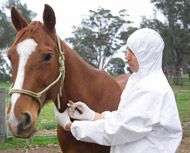
Hendra virus is in the news again. In the last month, the disease has struck in the Gold Coast hinterland and again in northern New South Wales. The Queensland and New South Wales governments have provided additional funding of $6 million over three years for further research.

Hendra virus can live in horses, bats, humans and, as recent events have demonstrated, dogs. This is a nasty virus. About 70% of horses who get the disease will die from it. Of even more concern is the fact that it has also proved fatal to people. Where did it come from, and what can be done about it?

August 26, 2011

Proposed Changes to Environmental Protection law


The principal federal environmental legislation over the past eleven years has been the Environment Protection and Biodiversity Conservation Act 1999 (EPBC Act). In 2008 the then Minister for the Environment Heritage and the Arts, Peter Garrett, commissioned an independent review into the EPBC Act. The review was undertaken by an expert panel led by Dr Allan Hawke, and the report was tabled in Parliament on 21 December 2009. The review put forward 71 recommendations. The Australian Government has now released its response to the review on 24 August 2011. In a speech to the National Press Club, the Minister for Sustainability, Environment, Water, Population and Communities, Tony Burke, outlined some of the more important aspects of this response.