 |
| Image: Department of Immigration |

July 25, 2012
Sitting comfortably? How sitting is affecting our health


July 24, 2012
The consequences of a poor anti-money laundering program: the HSBC case study
 |
| Image source: Flickr user photobunny |
July 10, 2012
Staying on at school is not just a matter of money
There is considerable evidence about the correlation between socio-economic status (SES)–particularly parental income, education and occupation–and educational attainment. Hence the inclusion of a measure of SES on the Myschool website, which allows for the comparison of ‘SES-equivalent’ schools, and higher education institutions receiving funding on the basis of meeting targets for the representation of students from low SES backgrounds.
While traditional SES measures may allow for comparisons or targets, they provide little guidance to policy makers on how to overcome such disadvantage–it is generally not possible to change the education level of a student’s parent for example. However a new study has emphasised the role of student characteristics–aspirations, poor school experience and participation in activities such as smoking and alcohol consumption–which may prove more amenable to direct policy interventions.
 |
| Image: Victorian Government |
While traditional SES measures may allow for comparisons or targets, they provide little guidance to policy makers on how to overcome such disadvantage–it is generally not possible to change the education level of a student’s parent for example. However a new study has emphasised the role of student characteristics–aspirations, poor school experience and participation in activities such as smoking and alcohol consumption–which may prove more amenable to direct policy interventions.
July 9, 2012
Australia’s performance against Anti-corruption treaty reviewed
 |
| Image source: Commonwealth Ombudsman |
July 5, 2012
SBY’s visit – the bigger picture

At the second Indonesia-Australia Leaders’ Meeting in Darwin on 3 July, Prime Minister Julia Gillard and President Susilo Bambang Yudhoyono re-affirmed the two countries’ ‘comprehensive strategic partnership, based on a mutual commitment to each other’s progress, prosperity and security’. The
Joint Statement agreed by the two leaders highlights cooperation across a range of issues, including regional institutional architecture, trade, defence and maritime cooperation, policing, development assistance, and people-to-people links.
What can be done about the social determinants of health?
 |
| Image source: World Health Organization |
July 3, 2012
Trafficking in Persons Report 2012
 |
June 29, 2012
Appliance energy ratings get the standard treatment
 |
| Image source :ACT government |
New Place Based Income Management to commence 1 July
 |
| Image: Bankstown Railway Station (Wikimedia Commons) |

So, how will the new Place Based Income Management operate and how does it differ from existing forms? Why base it in particular areas? What do we know about whether or not it is likely to be successful?
June 28, 2012
Update on statistics for boat arrivals
The Parliamentary Library produces a number of publications about asylum seekers and immigration. The publication, Boat arrivals in Australia since 1976 provides a brief overview of the historical and political context surrounding boat arrivals in Australia. An update of the statistical appendix on boat arrival figures is provided below. Please note that the publication has not yet been formally updated.
June 27, 2012
Trafficking in Persons - Special Rapporteur's Report to the Human Rights Council
 On 22 June, Joy Ngozi Ezeilo, the Special Rapporteur on Trafficking in Persons especially women and children, presented her annual report to the United Nations Human Rights Council, including reports of her missions to Thailand and Australia.
Special Rapporteurs are independent experts appointed by the United Nations Human Rights Council (formerly the Commission on Human Rights) to investigate, monitor, and advise on human rights violations – world wide or in specific countries. In carrying out her mandate, the Special Rapporteur undertakes country visits to study the situation on the ground and, develop recommendations to better prevent or combat trafficking and protect the human rights of its victims; and takes action on complaints about human rights violations against trafficked persons.
June 26, 2012
Australia's tertiary students - the latest snapshot
The National Centre for Vocational Education Research (NCVER) has just released Tertiary Education and Training 2010, an annual publication that compares vocational education and training (VET) and higher education on a range of key measures.
It draws on data from the National VET Provider Collection and the Higher Education Statistics Collection.
It draws on data from the National VET Provider Collection and the Higher Education Statistics Collection.
June 22, 2012
How's it going? Australia's Health 2012
The thirteenth report on Australia's health was released by the Australian Institute of Health and Welfare (AIHW) on 21 June 2012. The AIHW describes Australia's Health 2012 as 'the most comprehensive and authoritative source of national information on health in Australia', and many would not disagree. Produced biennially since 1988, the report has grown both in size and stature as a reliable report card on the status of the country's health and the services and resources that deliver and support it. A companion In brief publication was also released.
 |
| Source: AIHW |
Is $325 million enough for Tasmania's health care system?
Last week, after much speculation, the Federal Government announced that it would provide an extra $325 million over four years to Tasmania’s health care system. Previously the Tasmanian Government had announced cuts of up to $500 million over four years to the health care system, commencing from 1 July 2011. Many of these cuts were directed to elective surgery, reduced services and the closure of hospital beds. The most recent Tasmanian budget (May 2012) announced a reduction of the savings target by $120 million.
 |
| Image source: www.yourhealth.gov.au |
2011 Census release
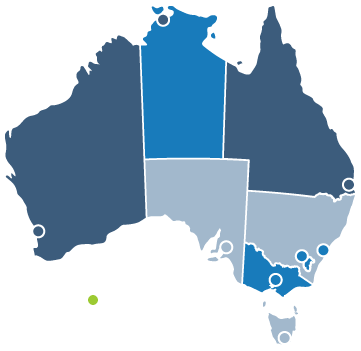 |
| Image Source: http://www.abs.gov.au/ |
Australia’s migrant population is growing and changing
In the decade to 2011, the proportion of the population who were born overseas increased from 27.4% to 30.2%.
Over the same period, the proportion of Australians with at least one parent born overseas increased from 42.7% to 46.3%
There was a shift away from Europe and towards Asia.
- The number born in India more than trebled, from 95 452 in 2001 to 295 362 in 2011.
- The number born in China (excludes SARs and Taiwan) more than doubled from 142 780 to 318 969.
June 21, 2012
Income management: some answers to key questions
 |
| Image: BasicsCard kiosk, (Centrelink) |

While the policy of income management of welfare payments has been highly controversial, the specific details of its various forms are not generally well understood.
The Parliamentary Library has released a Background Note seeking to address this lack of understanding. It provides a brief overview of the history of income management and responses to a number of key questions about the policy.
June 19, 2012
New marine reserve proposals
 |
| Image source: Wikimedia Commons |

June 15, 2012
Hearing impairment—the silent barrier to Closing the Gap
 |
| Image source: Northern Territory Government |
Dissecting the growth of vocational education and training in Victoria
 |
| Image source: Victorian Government |
Amid this debate, the National Centre for Vocational Education Research (NCVER) has released preliminary Students and Courses data for 2011. The full publication (due in July) provides data on the numbers of students, subject enrolments, hours of delivery and qualifications in Australia’s public vocational education and training (VET) system.
The preliminary data reveals some interesting results for one state in particular: Victoria.
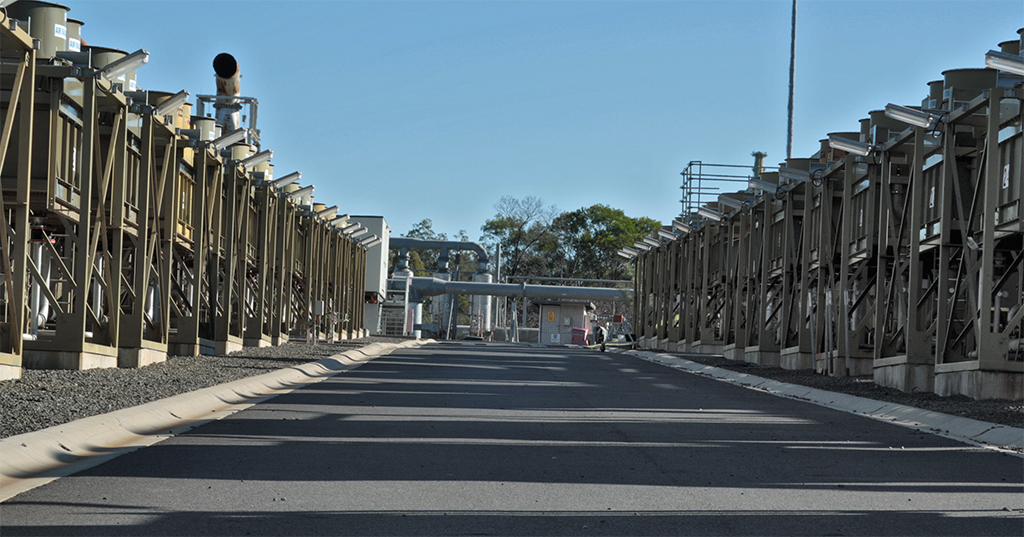
The deeper worries about coal seam gas
 |
| Image source: WikiMedia Commons |

Subscribe to:
Posts (Atom)