 |
| Image source: British Library
|

August 27, 2012
Who is on Newstart?


August 24, 2012
Opposition Leaders suspended from the House of Representatives
On 20 August 2012 Leader of the Opposition, Tony Abbott, was ejected from the House of Representatives. Since Federation no Prime Minister has been suspended or ejected from the House, but Mr Abbott became the fourth Leader of the Opposition to be ordered from the chamber. Three other Opposition leaders have been ordered from the House but their suspensions did not proceed.
August 23, 2012
Community cabinets in Australia
 |
| Image source: DPMC |
More funding for all schools—an update on Gonski
 |
| Image source: Victorian Government |
This newly announced commitment follows the release on the News
Limited website of a list
of 3254 schools (about one-third of all schools) that would lose funding. State
governments and non-government education authorities used data provided by the
Australian Government for their modelling to calculate funding for individual
schools under the Gonski proposals. According to the list, the significant
majority of schools (72 per cent) that would lose funding are government
schools, and the list includes schools in rural areas and special schools. The 2010
funding data referred to in the list is total government recurrent funding
(federal and state and territory) as published on the My
School website.
August 22, 2012
Time for a change? Access to support and visas for trafficking victims
 |
| Image source: United Nations Office on Drugs and Crime |
August 20, 2012
Parliamentary remuneration
Recent legislative changes have given the Remuneration Tribunal the power to determine MPs’ base salary and removed the Parliament’s power to disallow these determinations. Further information on parliamentary salaries and entitlements is available in the Parliamentary Library publications, The basic salary of senators and members Parliamentary remuneration and entitlements and Superannuation benefits for senators and members elected before 2004.
Children in immigration detention
As part of the Government’s response to the Expert Panel on Asylum Seekers, it would appear that children will again be held in processing centres on Nauru. This policy has been subject to sustained criticisms by refugee advocates, human rights groups and government backbenchers. The debate in the Parliament last week reflected this, with many voicing opposition and deep disquiet to the return of such an approach. While not much is known about the arrangements and conditions specifically for children on Nauru in the past, this Flag Post provides a brief history of the effects on children in detention in the Australian context and a summary of some of the key research papers about the impact on children in detention.
 |
| Image source: A last resort? National Inquiry into Children in Immigration Detention |
As part of the Government’s response to the Expert Panel on Asylum Seekers, it would appear that children will again be held in processing centres on Nauru. This policy has been subject to sustained criticisms by refugee advocates, human rights groups and government backbenchers. The debate in the Parliament last week reflected this, with many voicing opposition and deep disquiet to the return of such an approach. While not much is known about the arrangements and conditions specifically for children on Nauru in the past, this Flag Post provides a brief history of the effects on children in detention in the Australian context and a summary of some of the key research papers about the impact on children in detention.
August 17, 2012
Expert panel member provides insight into Asian Century White Paper
 |
| Image source: Department of Prime Minister and Cabinet |
Professor Drysdale reinforced the enormous speed and scale of change in Asia, the major role (even on conservative estimates) that Asia would continue to play in the global economy, and its fundamental importance in shaping Australia’s future growth trajectory in the decades to come.
Trading aviation emissions – Part 3: Australia outlines its position
 |
| Image source: Wikimedia Commons |

August 16, 2012
Report of the Expert Panel on Asylum Seekers and regional processing: legislation before the Senate
 |
| Image source: Australia Awards |
August 15, 2012
Despite the GFC, income support reliance remains low
 |
| Image source: Western Australian Department of Health
|
In this context, it is timely to look at the impact of previous changes to the welfare system and consider what proportion of the working age population is affected by issues being considered by the Committee.
Australia and the Arab-Israeli conflict: from ‘choosing the least of a number of evils’ to ‘strong backers of a two-state solution’
 |
| Image source: Wikimedia Commons |

August 13, 2012
Breaking the deadlock? The Report of the Expert Panel on Asylum Seekers
 |
| Image source: Department of Prime Minister and Cabinet |
On 28 June 2012 the Prime Minister and the Minister for Immigration and Citizenship announced that the Government would establish an expert advisory panel to consider options for “the best way forward for our nation in dealing with asylum seeker issues”. This followed months of political deadlock over how to best manage the issue of increasing numbers of asylum seekers arriving in Australia by boat, following the High Court’s rejection of the Government’s planned transfer arrangement with Malaysia in August 2011.
In February 2012 independent Member Rob Oakeshott introduced a Bill aimed at breaking the deadlock, which was supported by the Government. The Bill passed through the House of Representatives on 27 June 2012 but was defeated in the Senate the following day, with neither the Opposition nor the Greens prepared to support it, albeit for very different reasons. With few options left available to it, the Government announced the creation of a panel to provide expert advice on the best way forward.
August 6, 2012
Managing the performance of the health care system
 |
Image source: Health Statistics New South Wales
|
Performance of the health care system was put on the national agenda in 2010 when the then Prime Minister Kevin Rudd outlined his vision for the National Health and Hospital Network (NHHN). One of the features of the NHHN was improved reporting and performance standards. The precursor to this were the objectives, outcomes, progress measures and outputs that were agreed by the Council of Australian governments (COAG) in 2008 as part of the National Healthcare Agreement (NHA). Although aspects of the NHHN were re-negotiated, the commitment to improved transparency and accountability remained.
August 3, 2012
Socioeconomic dimensions of pokie machine losses
 |
| Image source:
|
August 2, 2012
Melbourne by-election results for the Greens
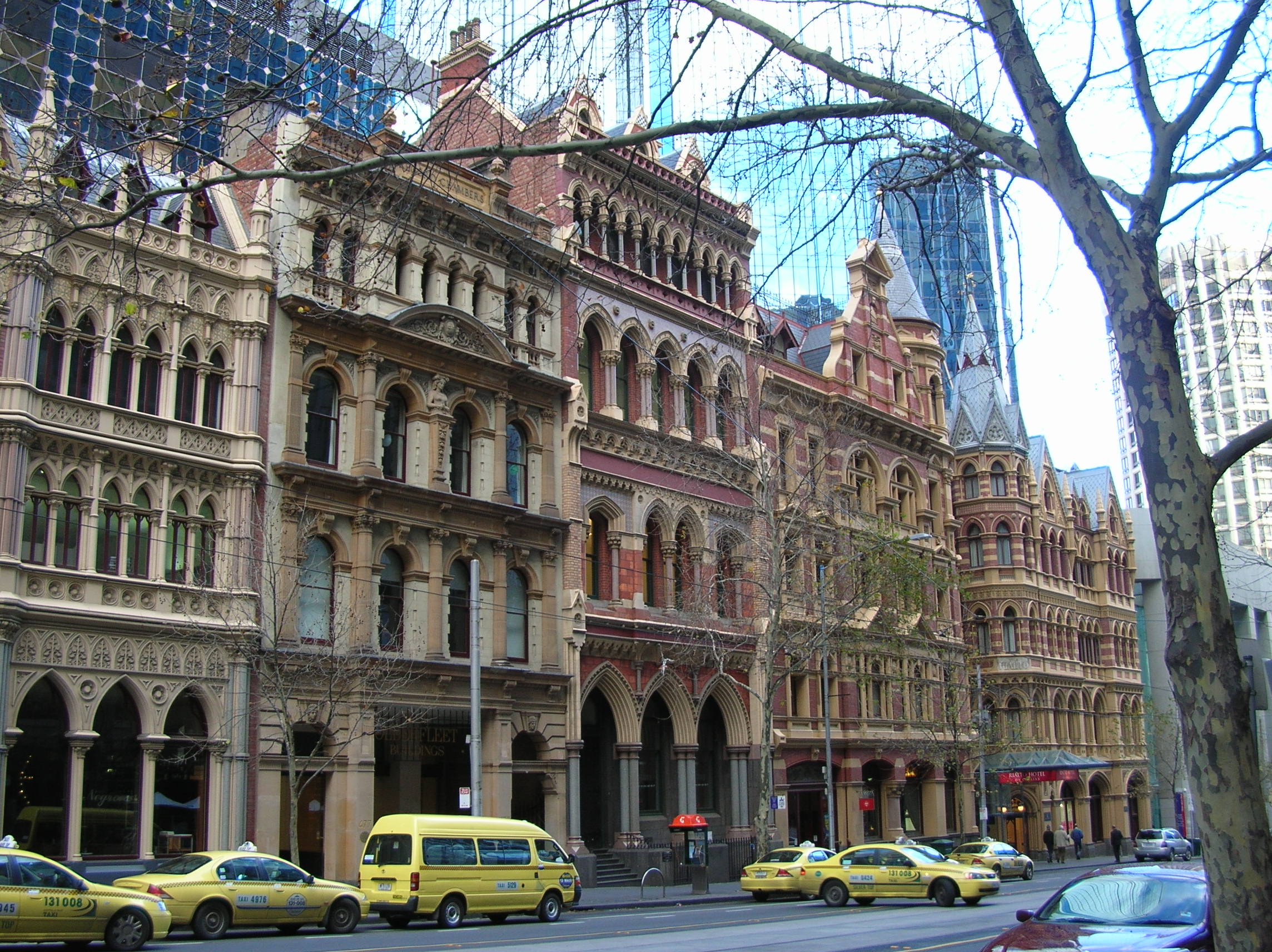 |
| Collins Street, Melbourne CBD Image source: Wikimedia Commons |

A by-election was conducted for the Victorian state electorate of Melbourne on Saturday 21 July 2012. Vote-counting and rechecking has now been completed, with the ALP emerging as the winning party with 51.51 per cent of votes after distribution of preferences.
August 1, 2012
Australia’s current debt position – update July 2012
In recent times a lot has been spoken about Australia’s debt level. This was no more evident than in the lead up to the last Federal election where it seemed to dominate debate. This article updates the data published in an earlier FlagPost titled Australia’s current debt position. I therefore intend in this article to report the latest available data on Australia’s level of debt for both the public and private sectors in gross and net terms. For more information on gross and net debt the reader is referred to the earlier FlagPost.
July 25, 2012
Sitting comfortably? How sitting is affecting our health
 |
| Image: Department of Immigration |

July 24, 2012
The consequences of a poor anti-money laundering program: the HSBC case study
 |
| Image source: Flickr user photobunny |
July 10, 2012
Staying on at school is not just a matter of money
There is considerable evidence about the correlation between socio-economic status (SES)–particularly parental income, education and occupation–and educational attainment. Hence the inclusion of a measure of SES on the Myschool website, which allows for the comparison of ‘SES-equivalent’ schools, and higher education institutions receiving funding on the basis of meeting targets for the representation of students from low SES backgrounds.
While traditional SES measures may allow for comparisons or targets, they provide little guidance to policy makers on how to overcome such disadvantage–it is generally not possible to change the education level of a student’s parent for example. However a new study has emphasised the role of student characteristics–aspirations, poor school experience and participation in activities such as smoking and alcohol consumption–which may prove more amenable to direct policy interventions.
 |
| Image: Victorian Government |
While traditional SES measures may allow for comparisons or targets, they provide little guidance to policy makers on how to overcome such disadvantage–it is generally not possible to change the education level of a student’s parent for example. However a new study has emphasised the role of student characteristics–aspirations, poor school experience and participation in activities such as smoking and alcohol consumption–which may prove more amenable to direct policy interventions.
Subscribe to:
Posts (Atom)